
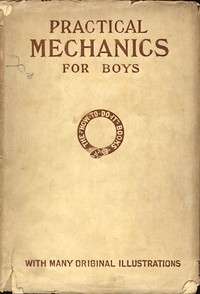
Practical Mechanics for Boys by James Slough Zerbe
Published in 1913, Practical Mechanics for Boys is exactly what it says on the tin: a guidebook. There's no fictional story or characters. Instead, author J. S. Zerbe acts as a patient, enthusiastic instructor, walking the reader through the fundamental principles of mechanics, electricity, and workshop practice. He starts with the absolute basics—the properties of metals, the use of simple tools like the saw and plane—and builds up to more complex projects like building a small electric motor, a telegraph system, or understanding how a gasoline engine works.
The Story
The 'plot' is one of progress and empowerment. Each chapter is a new skill unlocked. You learn how to read a blueprint, solder a wire, set up a home workshop on a budget, and maintain the newfangled machines of the era, like bicycles and early automobiles. The book is structured as a series of lessons, each with clear explanations and detailed, hand-drawn illustrations. The narrative is the reader's own journey from curiosity to competence, guided by Zerbe's confident voice.
Why You Should Read It
This book is a direct line to a different mindset. Zerbe's core belief is that understanding how things work is the key to independence and success. His tone is wonderfully encouraging, aimed at sparking a lifelong passion for making and fixing. Today, in a world of sealed devices and disposable goods, that message feels almost radical. Reading it, you appreciate the profound satisfaction that comes from tangible creation. It’s also a fascinating historical document. The projects and technologies Zerbe focuses on—windmills for farm water, simple telephones, early electrical circuits—paint a vivid picture of the technological landscape of pre-WWI America.
Final Verdict
This isn't for everyone. If you're looking for a novel, look elsewhere. But if you're a history enthusiast, a maker, a teacher, or just someone nostalgic for hands-on knowledge, this book is a gem. It's perfect for anyone interested in the DIY spirit of a bygone era, the history of technology education, or for a parent looking for wholesome, project-based ideas (though the language is definitely of its time). Think of it less as an instruction manual and more as an inspiring artifact—a reminder of the power and joy found in building something yourself.
There are no legal restrictions on this material. You can copy, modify, and distribute it freely.
Matthew Johnson
1 month agoIt effectively synthesizes complex ideas into a coherent whole.
George Garcia
10 months agoLooking at the bibliography alone, the chapter on advanced strategies offers insights I haven't seen elsewhere. It’s a comprehensive resource that doesn't feel bloated.
Patricia Gonzalez
1 year agoFrom a researcher's perspective, the footnotes provide extra depth for those who want to dig deeper. Top-tier content that deserves more recognition.
Barbara Anderson
2 months agoRight from the opening paragraph, the concise summaries at the end of each section are a lifesaver. Truly a masterpiece of digital educational material.






Linda Brown
9 months agoSolid information without the usual fluff.