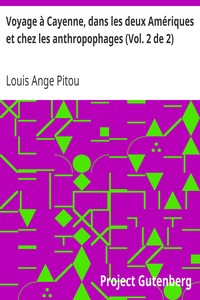
Voyage à Cayenne, dans les deux Amériques et chez les anthropophages (Vol. 2 de…
Let's be clear: this isn't a novel. It's a memoir from a man who lived a life stranger than fiction. Pitou was a journalist and pamphleteer who ran afoul of the revolutionary government in Paris. After a dramatic escape from execution, he was eventually captured and sentenced to deportation. This volume throws us right into the aftermath of that sentence, as he's transported across the Atlantic to the infamous French penal colony in Cayenne, French Guiana.
The Story
The book follows Pitou's grueling journey into exile. We experience the suffocating hold of the ship, the despair of arriving at a remote prison outpost, and the daily struggle for survival in a hostile, tropical environment. The authorities are corrupt, the conditions are deadly, and hope is thin. But the narrative takes a sharp turn when Pitou's path leads him beyond the confines of the colony and into contact with Indigenous communities in the interior—the very groups Europeans labeled as 'anthropophages' or cannibals. His account of these encounters is the heart of the book. He describes their customs, their social structures, and the complex, often tense, relationship between these native peoples and the encroaching European settlers and escaped convicts.
Why You Should Read It
What makes this book gripping is Pitou's voice. He's not a neutral observer; he's a participant, often a victim, of the system he describes. His fear, curiosity, and occasional grudging respect come through. You're not getting a dry history lesson. You're getting the confused, firsthand impressions of a European completely out of his depth. The real tension lies in watching him grapple with the propaganda he was fed versus the reality before his eyes. Are these people savage, or are they simply defending their way of life? His writing forces you to question the very idea of 'civilization.'
Final Verdict
This is a perfect pick for readers who love real-life adventure stories with a heavy dose of historical insight. If you enjoyed the peril of The Lost City of Z or the colonial critique in Heart of Darkness, but want a primary source straight from the 1790s, you'll be fascinated. It's also great for anyone interested in the messy, brutal reality of early colonialism and the European obsession with the 'Other.' Just be ready—it's an unflinching look at a harsh world, told by a man who was lucky to live through it.
Legal analysis indicates this work is in the public domain. Enjoy reading and sharing without restrictions.