
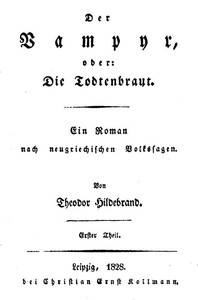
Der Vampyr, oder: Die Todtenbraut. Erster Theil. by Theodor Hildebrand
Published in 1828, Theodor Hildebrand's Der Vampyr, oder: Die Todtenbraut (The Vampire, or: The Dead Bride) is a fascinating piece of vampire fiction that arrived decades before Bram Stoker's famous count. It's a cornerstone of German Romantic horror, full of gloomy castles, family curses, and a pervasive sense of doom.
The Story
The story centers on the young Baroness Malwine von Hochburg. Her life is thrown into chaos when her father, the old Baron, dies under strange and sudden circumstances. His death isn't peaceful; it's shrouded in mystery and hints of a supernatural blight. Malwine is left vulnerable, and the castle feels like it's holding its breath. Into this tense atmosphere steps a distant relative, a Count who arrives to offer protection and guidance. But his presence is unsettling. Whispers and old legends about a family curse—a vampiric stain on their bloodline—begin to surface. As Malwine tries to navigate her grief and new responsibilities, she can't shake the feeling that her father's death was not natural, and that the real threat is still inside the castle walls, watching and waiting.
Why You Should Read It
This isn't a fast-paced action horror. The pleasure here is in the atmosphere. Hildebrand builds a world heavy with dread. You feel the chill of the stone corridors and the weight of the family's dark past. Malwine is a classic Gothic heroine—sensitive, perceptive, and trapped in a situation she doesn't fully understand. The horror is less about fangs and blood (though they're implied) and more about psychological terror and the fear of a corrupted legacy. Reading it, you get a real sense of being at the source of a river that would later flow into Dracula. It's a slow, creeping story that gets under your skin.
Final Verdict
This book is perfect for horror history fans and Gothic literature lovers. If you enjoy the mood of early Frankenstein or The Castle of Otranto, and you're curious about the vampire mythos before it became pop culture, you'll find this incredibly rewarding. It's also great for readers who appreciate character-driven tension over shock scares. Be prepared for a more formal, 19th-century style, but if you settle into its rhythm, Der Vampyr offers a uniquely authentic and chilling glimpse into the birth of modern vampire lore.
This work has been identified as being free of known copyright restrictions. Knowledge should be free and accessible.
John Wilson
8 months agoLooking at the bibliography alone, the step-by-step breakdown of the methodology is extremely helpful for students. I am looking forward to the author's next publication.
Christopher Davis
2 months agoFrom a researcher's perspective, the case studies and practical examples provided add immense value. This has become my go-to guide for this specific topic.
Jennifer Johnson
1 year agoUnlike many other resources I've purchased before, the evidence-based approach makes it a very credible source of information. It’s hard to find this much value in a single source these days.
Nancy Martin
1 year agoI took detailed notes while reading through the chapters and the way the author breaks down the core concepts is remarkably clear. This has become my go-to guide for this specific topic.




Patricia White
1 year agoAs someone working in this industry, I found the insights very accurate.