
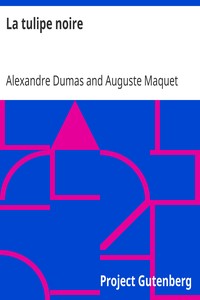
La tulipe noire by Alexandre Dumas and Auguste Maquet
The Story
The year is 1672 in Holland, and tulip mania is in full swing. A huge cash prize is offered to the first gardener who can produce a truly black tulip. Cornelius van Baerle, a peaceful man who cares more for his flower bulbs than politics, is close to a breakthrough. His life is perfect until his godfather, a political rival of the powerful William of Orange, is executed for treason.
Cornelius is guilt by association. He's dragged from his garden, accused of hiding treasonous letters, and sentenced to life in prison. His one hope? The black tulip bulb he secretly smuggled in with him. From a cold, lonely cell, he must find a way to nurture it to bloom. His only ally is Rosa, the jailer's daughter, who believes in his innocence. Together, they face a race against time, a corrupt rival who will steal the prize, and the ever-present shadow of the executioner's axe.
Why You Should Read It
On the surface, this is a classic adventure about an innocent man fighting a corrupt system. But what makes it special is its heart. Cornelius isn't a typical sword-fighting hero; he's a scholar and an artist whose weapon is patience. His growing bond with Rosa is tender and real—it's a partnership built on trust in a place designed to destroy it.
The book also has a wicked sense of irony. In the middle of violent political purges, the most dangerous contraband isn't a weapon or a secret message... it's a flower bulb. Dumas and Maquet make you feel the immense tension of watching a single shoot of green grow, knowing it could mean freedom or death. It’s a brilliant reminder that humanity and beauty can persist in the darkest places.
Final Verdict
This book is a treat for anyone who loves a tight, suspenseful plot with a deeply satisfying ending. It’s perfect for fans of historical fiction who want something different from the usual court intrigues and battles. If you enjoy stories where intellect and integrity win the day, or if you just love rooting for the nice guy against impossible odds, you’ll be hooked. It’s also a great, shorter entry point into Dumas's world if The Count of Monte Cristo or The Three Musketeers feels too daunting. Ultimately, The Black Tulip is a compact, powerful novel that proves the greatest adventures can grow from the smallest of seeds.
Legal analysis indicates this work is in the public domain. You can copy, modify, and distribute it freely.
Jessica Davis
1 month agoI appreciate how this edition approaches the core problem, the insights into future trends are particularly thought-provoking. Finally, a source that prioritizes accuracy over hype.
Jennifer Walker
1 year agoHelped me clear up some confusion on the topic.
Kenneth Allen
1 year agoSimply put, the arguments are well-supported by credible references. A true masterpiece.
Andrew Ramirez
4 months agoVery interesting perspective.




Patricia Davis
8 months agoI was skeptical about the depth of this book at first, but the narrative arc keeps the reader engaged while delivering factual content. Top-tier content that deserves more recognition.