
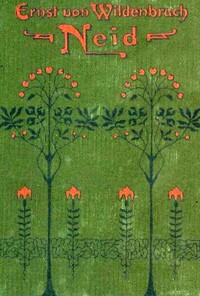
Neid by Ernst von Wildenbruch
Let's talk about a German classic that doesn't get enough love: Ernst von Wildenbruch's Neid (Envy). Published in the 1890s, it's a sharp, psychological look at a feeling we all recognize, pushed to its most destructive extreme.
The Story
The plot revolves around two men. First, there's the Baron—comfortable, respected, and secure in his privileged world. Then there's Robert, a talented but poor artist who lives in the Baron's shadow. They aren't direct rivals, but Robert is constantly exposed to a life of ease and recognition he can never have. The Baron isn't a villain; he's mostly oblivious. But for Robert, every kindness, every display of the Baron's good fortune, feels like a personal insult. The envy starts small, like a weed. It twists his view of everything. What begins as bitter thoughts slowly poisons his creativity, his relationships, and his very sanity. The story tracks this chilling transformation, asking how long a man can live with such a corrosive emotion before it spills over into action.
Why You Should Read It
Here's what got me: Wildenbruch doesn't make Robert a simple monster. He makes you feel the ache of that envy. You understand the frustration of seeing doors closed to you that swing open for others. It's uncomfortably relatable. At the same time, you watch with dread as a human being is consumed from the inside out. The setting is specific—that rigid Prussian society—but the core emotion is universal. It's a masterclass in building psychological tension without a single crime (at first). You keep reading because you need to know: will he snap? And if he does, what form will it take? The book is a quiet, relentless study of how one of the 'quieter' sins can be more devastating than any outburst of anger.
Final Verdict
Neid is perfect for readers who love character-driven drama and psychological deep dives. If you enjoyed the tense, internal struggles in novels like Dostoevsky's Notes from Underground or the social tensions in Edith Wharton's work, you'll find a lot to like here. It's also a great, accessible entry point into classic German literature—it's short, focused, and its theme hits home immediately. Just be warned: after reading it, you might catch yourself examining your own greener-grass moments a little more carefully. A haunting, brilliant little book.
You are viewing a work that belongs to the global public domain. You are welcome to share this with anyone.
Noah Young
1 year agoSimply put, it provides a comprehensive overview perfect for everyone. A valuable addition to my collection.
John Lee
6 months agoSurprisingly enough, the content flows smoothly from one chapter to the next. Absolutely essential reading.

Ashley Martinez
1 year agoBased on the summary, I decided to read it and it creates a vivid world that you simply do not want to leave. Definitely a 5-star read.