1

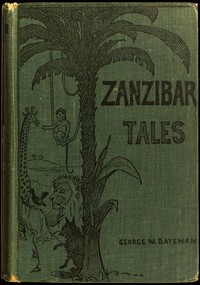
Zanzibar Tales: Told by Natives of the East Coast of Africa — Reading Notes
(3 User reviews)
762
Project Gutenberg
2011
Not confirmed
Swahili-speaking peoples -- Folklore; Tales -- Africa, East; Tales -- Tanzania
Readers of public-domain and historical texts
Project Gutenberg digital edition
en
Edition facts
Words
28,914
Reading time
126 min
Text sections
5
Before opening Zanzibar Tales: Told by Natives of the East Coast of Africa — Reading Notes, the edition data offers a quick orientation: 28,914 words, 2 hr 6 min estimated reading time, and 5 detected text sections.
The text analysis averages about 18.3 words per sentence, while the detected sections provide another way to judge how the source is divided.
Project Gutenberg metadata also associates the work with “Swahili-speaking peoples -- Folklore,” connecting these edition facts with the source record’s subject description.
Source:
Project Gutenberg record #37472
Bateman's 1901 translation of Swahili folktales, framed by a sardonic preface on colonial hunting, features talking animals, repetitive combat, and a trickster gazelle named Keejeepaa who outwits a seven-headed snake.
Editorial Edition Score
4.7/5
★★★★★
★★★★★
Calculated from edition completeness, EPUB availability, text structure and catalogue metadata. Not a user rating.
How this score is calculated
- Description quality20 pts
- Title & short description10 pts
- Source metadata20 pts
- Text length15 pts
- Chapters / structure15 pts
- EPUB file integrity20 pts
Total of 100 points, scaled to a 2.5-5.0 range. Editions with an empty description or a missing EPUB file are not scored.
Edition quality
Read the Text
Soongoora said firmly: "No, no; you have friends to go to. Go back."
So he persuaded her, and she went back; but he kept on, following the footmarks, and saw--as he had suspected--that they went into his house.
"Ah!" said he to himself, "Mr. Lion is inside, is he?" Then, cautiously going back a little way, he called out: "How d'ye do, house? How d'ye do?" Waiting a moment, he remarked loudly: "Well, this is very strange! Every day, as I pass this place, I say, 'How d'ye do, house?' and the house always answers, 'How d'ye do?' There must be some one inside to-day."
When the lion heard this he called out, "How d'ye do?"
Then Soongoora burst out laughing, and shouted: "Oho, Mr. Simba! You're inside, and I'll bet you want to eat me; but first tell me where you ever heard of a house talking!"
Upon this the lion, seeing how he had been fooled, replied angrily, "You wait until I get hold of you; that's all."
"Oh, I think you'll have to do the waiting," cried the hare; and then he ran away, the lion following.
But it was of no use. Soongoora completely tired out old Simba, who, saying, "That rascal has beaten me; I don't want to have anything more to do with him," returned to his home under the great calabash tree.
THE LION, THE HYENA, AND THE RABBIT.
Once upon a time Sim'ba, the lion, Fee'see, the hyena, and Keetee'tee, the rabbit, made up their minds to go in for a little farming. So they went into the country, made a garden, planted all kinds of seeds, and then came home and rested quite a while.
Then, when the time came when their crops should be about ripe and ready for harvesting, they began to say to each other, "Let's go over to the farm, and see how our crops are coming along."
So one morning, early, they started, and, as the garden was a long way off, Keeteetee, the rabbit, made this proposition: "While we are going to the farm, let us not stop on the road; and if any one does stop, let him be eaten." His companions, not being so cunning as he, and knowing they could outwalk him, readily consented to this arrangement.
Well, off they went; but they had not gone very far when the rabbit stopped.
"Hullo!" said Feesee, the hyena; "Keeteetee has stopped. He must be eaten."
"That's the bargain," agreed Simba, the lion.
"Well," said the rabbit, "I happened to be thinking."
"What about?" cried his partners, with great curiosity.
"I'm thinking," said he, with a grave, philosophical air, "about those two stones, one big and one little; the little one does not go up, nor does the big one go down."
The lion and the hyena, having stopped to look at the stones, could only say, "Why, really, it's singular; but it's just as you say;" and they all resumed their journey, the rabbit being by this time well rested.
When they had gone some distance the rabbit stopped again.
"Aha!" said Feesee; "Keeteetee has stopped again. Now he must be eaten."
"I rather think so," assented Simba.
"Well," said the rabbit, "I was thinking again."
Their curiosity once more aroused, his comrades begged him to tell them his think.
"Why," said he, "I was thinking this: When people like us put on new coats, where do the old ones go to?"
Both Simba and Feesee, having stopped a moment to consider the matter, exclaimed together, "Well, I wonder!" and the three went on, the rabbit having again had a good rest.
After a little while the hyena, thinking it about time to show off a little of his philosophy, suddenly stopped.
"Here," growled Simba, "this won't do; I guess we'll have to eat you, Feesee."
"Oh, no," said the hyena; "I'm thinking."
"What are you thinking about?" they inquired.
"I'm thinking about nothing at all," said he, imagining himself very smart and witty.
"Ah, pshaw!" cried Keeteetee; "we won't be fooled that way."
So he and Simba ate the hyena.
When they had finished eating their friend, the lion and the rabbit proceeded on their way, and presently came to a place where there was a cave, and here the rabbit stopped.
"H'm!" ejaculated Simba; "I'm not so hungry as I was this morning, but I guess I'll have to find room for you, little Keeteetee."
"Oh, I believe not," replied Keeteetee; "I'm thinking again."
"Well," said the lion, "what is it this time?"
Said the rabbit: "I'm thinking about that cave. In olden times our ancestors used to go in here, and go out there, and I think I'll try and follow in their footsteps."
Bateman's preface to these Swahili tales, dated 1901, immediately sets a skeptical tone: he contrasts the 'big game' hunters who return with bazaar-bought trophies against the 'wonderful animals' described by native tribesmen—beasts that speak, gazelles that serve as overseers, and hares that eat flesh. The translator positions himself as a conduit for stories 'told to me, in Zanzibar, by negroes whose ancestors told them to them,' a chain of oral transmission he treats with dry irony rather than ethnographic reverence.
The first tale excerpted, featuring the gazelle Keejeepaa, demonstrates the collection's characteristic structure: a clever animal protagonist uses repeated, almost mechanical actions—cutting off a snake's heads one by one—to overcome a monstrous adversary. The old woman's ecstatic reaction ('jumped, and shouted, and laughed, like a girl of nine') underscores the tales' blend of violence and comic release.
The Translator's Framing Voice
Bateman's preface is worth reading as a separate artifact. He mocks European hunters who 'never came within miles of such wonderful animals as those described by the tribesmen,' and his aside about unsuccessful anglers 'in civilized countries' reveals a wry, self-aware narrator. The tone is not neutral: he calls the slave market in Unguja 'the only, and the last, open slave-market in the world then,' a detail that situates the tales within a specific historical moment. Readers should note how Bateman's voice—colloquial, slightly sardonic—colors the entire collection. He does not claim the stories are authentic folklore; he says only that they 'were told to me.' This framing invites a reading that attends to the translator's role as intermediary, not transparent conduit.
Repetition and Incremental Combat
The excerpt from the first tale shows a pattern that likely recurs throughout the collection: Keejeepaa the gazelle faces a seven-headed snake, and the narrative describes each decapitation in near-identical terms. 'When he put in his second head it was cut off with the same quickness,' and the snake's only reaction is a mild complaint: 'Who's inside there, scratching me?' The combat is not suspenseful but ritualistic, building to the seventh head where Keejeepaa delivers a taunt ('you've climbed many trees, but this you can not climb') before collapsing. The old woman's revival of the gazelle—sprinkling water, turning him 'this way and that way' until he sneezes—introduces a healing motif that balances the violence. Readers encountering multiple tales should watch for variations on this pattern: how many repetitions, what kinds of taunts, and what aftermaths follow the defeat.
Social Hierarchy and the Trickster's Role
Keejeepaa, though a gazelle, operates within a clear social hierarchy. He refers to a human 'master' and a 'sultan,' and after conquering the snake's house, he declares: 'This place belongs to him now.' The gazelle does not claim power for himself; he is a servant-trickster who secures wealth for his master. The old woman, despite her age, kisses Keejeepaa's foot and calls him 'my grandson,' a familial term that blurs species boundaries. Later, Keejeepaa organizes the entire wedding procession, 'going all through the company, from the ladies to the slaves, and seeing that every one was well supplied.' This managerial role—part steward, part hero—suggests that the tales may consistently use animal characters to explore themes of loyalty, service, and the proper ordering of society. The gazelle's reward is not autonomy but the satisfaction of his master's approval.
Setting and Material Culture
The excerpts offer glimpses of a world defined by trade goods and domestic spaces. The snake's house contains 'store-rooms full of goods, chambers full of expensive foods, rooms containing handsome people who had been kept prisoners for a long time, slaves, and everything.' This inventory-like description emphasizes material abundance and captivity. The wedding journey includes 'ladies-in-waiting, and slaves, and horsemen,' and the company travels in a disciplined rhythm: resting at noon, stopping at five, arising at daybreak. The gazelle's new town is identified by 'many houses' coming into view, with a specific palace. These details ground the fantastical elements—talking animals, multiple heads—in a recognizable world of caravans, courtyards, and social rank. Readers should attend to how later tales describe houses, food, clothing, and travel, as these repeated motifs build a consistent fictional geography.
Because the excerpts are limited to the preface and one tale, readers should approach the collection as a series of discrete performances rather than a unified narrative. Bateman's framing invites skepticism about the stories' literal truth, but the tales themselves operate on their own logic of repetition, cleverness, and social order. Pay attention to how each story establishes its own rules—what animals speak, what tasks are set, what rewards are given—and how the translator's voice occasionally intrudes. The collection rewards a reading that treats each tale as a self-contained puzzle of wit and hierarchy.
Old Bateman’s tales have a way of lingering—that little gazelle Keejeepaa outsmarting the seven-headed snake feels almost like a quiet joke shared between friends. It reminds me, strangely, of those frontier stories in Legends of the Northwest — Context and Discussion, where cleverness wins out against something bigger and older. I think about how both worlds hold that same patient, wondering voice.
Daniel Young
2 weeks agoVictoria Moore
4 weeks agoThere are no comments for this eBook.
Reader reflection
What did you think of this book?
Answer a few questions and save a private reflection on this device.
Your progress
0
/
10
2
How did the book work for you overall?
3
Is this a title you would suggest to others?
4
How easy was the book to follow?
5
How closely did the book connect with your experience?
6
Could you apply anything you learned?
7
How distinctive were its ideas or approach?
8
Could you see yourself revisiting this book?
9
What is the main idea you are taking away?
10









Anthony Thompson
3 weeks ago