1

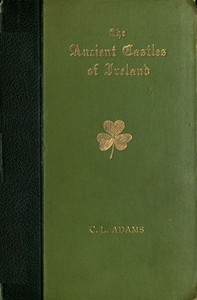
Castles of Ireland: Some Fortress Histories and Legends — Reading Companion
(0 User reviews)
47
Project Gutenberg
2020
Not confirmed
Legends -- Ireland; Castles -- Ireland
Readers of public-domain and historical texts
Project Gutenberg digital edition
en
Edition facts
Words
87,845
Reading time
382 min
Text sections
13
This digital edition of Castles of Ireland: Some Fortress Histories and Legends — Reading Companion is described by source-level measurements including 87,845 words, 6 hr 22 min estimated reading time, and 13 detected text sections.
The text analysis averages about 20.7 words per sentence, while the detected sections provide another way to judge how the source is divided.
Project Gutenberg metadata also associates the work with “Legends -- Ireland,” connecting these edition facts with the source record’s subject description.
Source:
Project Gutenberg record #62488
Examines the author's diction, dialogue, and descriptive choices in C. L. Adams's 1904 collection of Irish castle histories and legends, focusing on how she balances antiquarian detail with local folklore and her cautious handling of uncertain origins.
Editorial Edition Score
4.9/5
★★★★★
★★★★★
Calculated from edition completeness, EPUB availability, text structure and catalogue metadata. Not a user rating.
How this score is calculated
- Description quality20 pts
- Title & short description10 pts
- Source metadata20 pts
- Text length15 pts
- Chapters / structure15 pts
- EPUB file integrity20 pts
Total of 100 points, scaled to a 2.5-5.0 range. Editions with an empty description or a missing EPUB file are not scored.
Edition quality
Read the Text
fiscated lands of “Massarine,” and erected a residence on the site of the present building. This consisted of a moated courtyard flanked by towers.
Shortly afterwards he was knighted, and married the beautiful Marion Langford “of the flowing tresses.”
In 1610 Sir Hugh Clotworthy commenced to erect a castle according to the undertaking of the grant, and it was completed in three years. It consisted of a quadrangular pile, three storeys in height, which enclosed a small courtyard, and was flanked at the angles by square towers. The walls measured 6 feet in thickness. A short flight of granite steps led to the entrance hall, which contained a great open fireplace. On the right of the hall was the “buttery,” where at about 3 feet from the floor was a small square door through which food was distributed to the poor. The townspeople had the privilege of passing through the hall by the buttery to a pathway leading to the lake.
The river protected the castle on the west, while on the other sides it was surrounded by a moat. The “Mount” to the east of the castle was furnished with ordnance. Two bastions commanded respectively the town on the south and the lake on the north. The whole fortress covered more than five acres of ground.
Extensive alterations were made in the castle in 1813 by Chichester, fourth Earl of Massereene. At present it consists of a square embattled building of three storeys with a long wing at the same elevation running northward, flanked by two castellated towers near the end. At its extremity rises a very high tower in Italian style, which gives a most picturesque appearance to the stables when viewed from the lough.
The grand entrance hall is square, and the wall which once divided it from the centre courtyard has been replaced by oak pillars leading to an inner vestibule and staircase which occupies the site of the former open space. From this a passage extends the whole length of the castle to the Italian tower. The oak room is a magnificent apartment, wainscotted in dark Irish oak, relieved with lighter shades and exquisitely carved. The panels are painted with armorial bearings. There is a beautiful carved chimney-piece at the lower end of the apartment set with the grate in one frame. Upon touching a secret spring this all swings out and discloses a recess large enough to hide in. The furniture of the room is also Irish oak. Here is preserved the “Speaker’s Chair” of the Irish House of Commons.
The drawing-room and library are both very handsome rooms, and with the oak room, breakfast-room, parlour, and dining-room, form a splendid suite of rooms, opening one off the other. There is a very valuable collection of family portraits in the castle.
The Italian tower contains the chapel, record-room, and a small study. The first of these is in Gothic style and beautifully proportioned. Among the treasures to be seen here are Cranmer’s New Testament and Queen Mary’s Bible.
Over the front entrance is a stone screen slightly raised from the wall and ending in a pointed arch under the parapet wall. It is about 8 feet in width, and is handsomely sculptured with arms, mottoes, and events connected with the castle and its owners. At the top is a carved head representing Charles I., supposed to have been placed there by the first Viscount when he added to the fortress in 1662. Lower down are the arms of the founder and his wife, with the date of erection (1613), &c. Immediately over the hall door is a carved shell supported by mermaids, which represents the Skeffyngton crest.
The two ancient bastions have been formed into terrace gardens, and the grounds of the whole castle are most beautifully laid out. A splendid view is obtained from the old “Mount,” the summit of which is reached by a winding path.
The demesne is entered from the town through a castellated entrance, surmounted by a turretted warder’s lodge, which upon state occasions in modern times has been sentinelled with warders garbed in antique costume, battle-axe in hand.
Near the gatehouse upon the angle of the southern bastion is the carved stone figure of “Lady Marion’s Wolfdog,” representing that splendid Irish breed now extinct. At one time this statue surmounted a turret of the castle, where the great animal appeared to be keeping a “look out” over the lough. Local superstition said that it had appeared there without human agency on the night after the incident occurred with which the legend connects it, and that as long as it keeps watch over the castle and grounds so long will the race of Lady Marion Clotworthy continue to live and thrive.
C. L. Adams opens her 1904 collection with a frank admission of limitation: the castles of Ireland are too numerous for a single volume, and she offers only epitomised accounts of those of chief interest. This modesty shapes the book’s tone throughout—she is more assembler than authority, weaving together documentary evidence, local tradition, and her own observations. Her prose shifts between precise architectural description (the masonry is rough and massive, the loopholes unusually small) and a storyteller’s readiness to record a legend without endorsing it. The result is a work that reveals as much about the author’s method as about the fortresses themselves.
Diction: Between Antiquarian and Anecdotal
Adams’s vocabulary straddles two registers. On one side, she uses the language of the antiquary: fosse, bawn, peel tower, outworks. These terms ground the reader in the physical remains. On the other, she admits colloquial phrases like “murdering hole” and notes that local informants will invariably attribute a castle to King John, the Geraldines, or Cromwell. Her own diction is careful but not dry; she describes a tower that “does not seem, therefore, to have ever been of larger dimensions than at present,” a sentence that is both precise and slightly conversational. This blend keeps the text accessible without sacrificing accuracy.
Dialogue and Reported Speech: A Filtered Voice
Direct dialogue is rare in the excerpts. When Adams does report speech, it is usually mediated through a source: Giraldus Cambrensis says FitzStephen was “building a hold or castle upon a certain rocky hill called the Carricke.” She also paraphrases local tradition—that Ferrycarrig was built by FitzStephen, Shana Court by King John—but she never lets these voices speak without qualification. Her own authorial voice remains dominant, framing each claim with phrases like “tradition asserts” or “the most likely assumption.” This creates a layered effect: the reader hears the legends, but always through Adams’s cautious filter.
Descriptive Precision and Its Limits
Adams excels at concise, visual description. Of Ferrycarrig Castle she notes that the door is “so low and narrow that it is necessary to stoop when entering,” and that the tower occupies “the whole summit of the rocky point.” She also draws an unexpected comparison to Trajan’s Tower on the Danube, noting a similar entrance. Yet she does not over-interpret: when two apertures are locally called a “murdering hole,” she points out that a corresponding exterior opening suggests a different function. This restraint is typical. She describes what she sees, records what she is told, and leaves the final judgment to the reader.
Structure: The Castle as Narrative Anchor
Each chapter in the excerpts is organized around a single castle or pair of castles, but Adams does not follow a rigid template. She moves from location and physical description to historical context, then to legendary or disputed origins. The Ferrycarrig and Shana Court chapter, for instance, begins with the claim that one of them was the first Anglo-Norman fortress in Ireland, then weighs the evidence from Giraldus Cambrensis, local tradition, and later historians. This structure allows her to present conflicting accounts without forcing a conclusion. The castle itself becomes a fixed point around which competing stories revolve.
Adams’s editorial voice is that of a guide who knows her material but refuses to oversimplify. She invites readers to share her curiosity about the gap between what is known and what is only rumoured. For those approaching the book, it helps to read with an eye on her sources: she names her authorities, from the Calendar of State Papers to local histories, and her notes are as revealing as her main text. The castles, she reminds us, are relics of a stormy past—and so are the stories that cling to them.
Reading the careful way Adams traces a castle’s origins through rumor and stone reminded me of evenings spent with Vikram and the Vampire; or, Tales of Hindu Devilry — Story, Setting & Ideas, where every tale felt like a door left slightly ajar. Both books hold their mysteries gently, letting me sit with uncertainty rather than forcing answers. That patience stays with me long after the pages close.
There are no reviews for this eBook.
There are no comments for this eBook.
Reader reflection
Your personal reading reflection
Build a private reading journal entry for this title.
Your progress
0
/
10
2
Was reading this book enjoyable?
3
Would you encourage someone else to read it?
4
How easy was the book to follow?
5
Did any part of the book feel personally relevant?
6
Could you apply anything you learned?
7
How did the pace of the book feel?
8
How distinctive were its ideas or approach?
9
In one sentence, what did you learn?
10