1

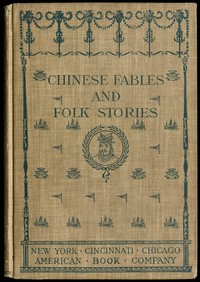
Chinese fables and folk stories — Themes and Context
(4 User reviews)
1144
Project Gutenberg
2024
Not confirmed
Folklore -- China; Tales -- China; Fables, Chinese
Readers of public-domain and historical texts
Project Gutenberg digital edition
en
Edition facts
Words
40,853
Reading time
178 min
Text sections
8
For Chinese fables and folk stories — Themes and Context, the stored edition analysis reports 40,853 words, 2 hr 58 min estimated reading time, and 8 detected text sections.
The text analysis averages about 16.1 words per sentence, while the detected sections provide another way to judge how the source is divided.
Project Gutenberg metadata also associates the work with “Folklore -- China,” connecting these edition facts with the source record’s subject description.
Source:
Project Gutenberg record #74897
This editorial note examines how the opening, middle, and later excerpts of 'Chinese Fables and Folk Stories' guide a first reading, focusing on the preface's framing, the structure of fables like 'The Hunter, the Snipe, and the Bivalve,' and the integration of cultural context.
Editorial Edition Score
4.7/5
★★★★★
★★★★★
Calculated from edition completeness, EPUB availability, text structure and catalogue metadata. Not a user rating.
How this score is calculated
- Description quality20 pts
- Title & short description10 pts
- Source metadata20 pts
- Text length15 pts
- Chapters / structure15 pts
- EPUB file integrity20 pts
Total of 100 points, scaled to a 2.5-5.0 range. Editions with an empty description or a missing EPUB file are not scored.
Edition quality
Read the Text
have a carp fish boiled in rice wine. But it is winter and the river is frozen. I know not how you will get that fish,” and then he went away.
Wong-Ziang gave his mother the medicine, and she asked, “What did the doctor say about me?”
“He said you needed a carp fish cooked in rice wine so that you may be strong,” answered Wong-Ziang. “It is very easy for me to find one. I am going now to the river.”
But the mother said, “Not now, my son. Wait until spring. The river is covered with ice.”
“I will see,” said Wong-Ziang; and he put on his fishing clothes. [18]
His mother said, “I fear you will die, if you go into the water.”
“I will see first if there are any fish,” said he.
When Wong-Ziang reached the river, he saw it was covered with ice. He made a great hole in the ice and went in, and after swimming and diving for some time, he caught a fish for his mother.
But his breath almost left him in the cold water, and when he came out, he could not stand on the ice.
He fell down, and his clothes froze to the ice with the net and the fish he had caught.
“He is gone a long time,” thought his mother. She called a servant girl who was passing, and said, “Ah Moi, will you go down to the River Ching-Ki, and see if my boy is there?”
Ah Moi went and saw the boy and the fish in the net lying frozen on the ice together.
She called, “Wong-Ziang,” but when no answer came back to her, she thought, “He is dead,” and ran in fear. But she met a farmer who was riding a cow and she told him, “Wong-Ziang is dead on the ice.” The farmer left his cow and went with her to see.
The farmer took off his own coat and wrapped it around the boy. He carried him in his arms and said to the servant, “I think he is not dead. Take the fish and net at once to Wong-Ziang’s mother.”
In an hour Wong-Ziang came to life again. He arose and cooked the fish for his mother. And in fifteen days she was well.
Soon after this, Wong-Ziang was given work in the next village as cook for a rich professor who had many pupils.
One day he went to the wilderness to cut wood. His mother knew that her boy worked hard, and so she went with him to help and they worked until sunset.
Suddenly a small tiger came out of the forest towards the mother, and from fear she became as one dead. Wong-Ziang screamed and made a great noise. He threw his clothes at the beast and it ran away. Then he carried his mother home, and the neighbors who had watched him all his life said, “Wong-Ziang will become a Hsao-Tsze if he is always like this.”
Wong-Ziang had seen twenty-one years when his mother died, and he had never left her for one day in all his life. He was liked by his teachers, schoolmates, and neighbors, for they said, “We can learn a great lesson from Wong-Ziang who has loved and honored his mother perfectly.”
While his mother was living, Wong-Ziang worked for her and spent little time or money in study; but after she died, he studied hard. When his work in the professor’s kitchen was done each day, he always sat outside the schoolroom door where he heard the teacher giving lessons to his pupils. [19]
For seven years he studied in this way before the teacher, Liao-Tsai, knew; but one day he found out what Wong-Ziang had been doing. In time he came to love him as his own son and he asked him, “Would you like to be my Chi-tsze (son by adoption)?”
And Wong-Ziang said, “I would, but I am poor and unlearned, and you are rich and honored. It could not be.”
But his teacher said, “I want you in my school. I have had many pupils, but none that have worked and learned as you have. I have known many sons, but none of them served and honored his parents so faithfully. Think about this two or three days and then give me your answer.”
After three days Wong-Ziang decided: and he came to Liao-Tsai, his teacher, and, kneeling down before him, he bowed his head low. And after this time he was as the professor’s own son.
In sixteen years, Wong-Ziang graduated from the great University with highest honors. He had studied all the books of the Chinese schools and was now a Han-Ling (Ph.D.).
The preface to Chinese Fables and Folk Stories immediately establishes the collection's dual purpose: to present Chinese fables—which the authors claim were previously thought absent from Chinese literature—and to offer insight into Chinese character. Mary Hayes Davis describes the challenge of translating not just words but “impressions” and “airy shapes” of Oriental imagination, aided by collaborator Rev. Chow Leung. This framing primes readers to expect stories that are both entertaining and culturally instructive, though the preface itself does not detail the fables' origins or authenticity.
The Preface as a Reading Lens
The preface reveals the authors' intention to bridge cultural understanding. Davis notes that “an open mind and the wisdom of great sympathy” are essential to grasp the Oriental mind. She emphasizes that the stories are “familiar in the home and school life of the children of China,” suggesting they are meant to reflect everyday values. However, the preface does not specify which fables are included or how they were selected. Readers should note that the preface's claims about the discovery of Chinese fables are presented without external evidence, and the book's structure—with an introduction by Yin-Chwang Wang Tsen-Zan—adds an authoritative voice that may influence interpretation.
The Structure of a Fable: Cause and Consequence
The excerpt from “The Hunter, the Snipe, and the Bivalve” illustrates a typical fable pattern: a conflict between two creatures leads to mutual destruction, captured by a third party. The wise teacher Yung-Moi observes the fight and draws a moral about overreaching power. The story includes direct speech and a reflective monologue, where Yung-Moi muses on the snipe's inability to live underwater and the bivalve's stationary greed. This internal reasoning mirrors the didactic function of fables, making the moral explicit. Readers can expect other stories to follow a similar arc: a natural observation, a conflict, and a lesson articulated by a character or narrator.
Cultural Details Embedded in Narrative
The excerpts embed specific cultural references that enrich the reading. In “The Hunter, the Snipe, and the Bivalve,” Yung-Moi is described as having studied Confucius for twenty years and taught over two thousand pupils. Footnotes explain terms like “Hsao-Tsze” (a title of honor) and describe Chinese fishing methods with hand nets. These details are not merely decorative; they ground the fable in a recognizable social and philosophical context. The story also references the “books of Confucius” as a source of wisdom, linking the fable's moral to Confucian values. Readers should pay attention to such footnotes and asides, as they provide essential context for understanding the stories' cultural significance.
Narrative Voice and Translation Choices
The English retelling employs a simple, almost oral style: “Yung-Moi thought deeply and said to himself, ‘There is meaning in all this.’” This directness may reflect the translators' effort to preserve the fables' original tone while making them accessible. The preface acknowledges the difficulty of retaining “color and charm” in translation, and the text occasionally uses archaic or formal phrasing (e.g., “the mother of all fishes”). Readers should consider how the translation choices shape the stories' impact—whether they feel like authentic Chinese tales or Westernized adaptations. The collaboration between Davis and Chow Leung suggests a deliberate attempt to balance accuracy with readability, but the final text likely reflects compromises.
As you read through the collection, observe how each fable balances entertainment with instruction. The preface sets expectations for cultural insight, while the stories themselves deliver morals through vivid, often violent, animal encounters. Pay attention to recurring motifs—such as the wise teacher or the consequences of greed—and note how the translators handle Chinese terms and concepts. This approach will help you appreciate the fables not just as stories, but as artifacts of cross-cultural exchange.
That rainy afternoon, the Chinese fables felt patient, almost like sitting with an old friend explaining why the snipe and bivalve held each other so tightly. I kept thinking about how stories anchor themselves to a place. Later, restless, I wandered into Folk-Lore and Legends: English — Background and Themes and found the same unhurried weight, just a different weather over the fields.
Benjamin Hall
2 weeks agoElijah Adams
4 weeks agoJoseph Nelson
3 weeks agoThere are no comments for this eBook.
Reader reflection
Your personal reading reflection
Build a private reading journal entry for this title.
Your progress
0
/
10
2
How much did you enjoy the reading experience?
3
How likely are you to recommend this book?
4
How demanding did the text feel?
5
Do you expect to return to this book?
6
Did the story or argument move comfortably?
7
How distinctive were its ideas or approach?
8
How well did it match your expectations?
9
In one sentence, what did you learn?
10










Owen Baker
1 month ago