
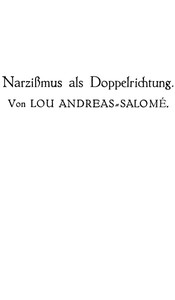
Narzißmus als Doppelrichtung by Lou Andreas-Salomé
Let's be honest, the title sounds intimidating. Narcissism as a Double Direction by Lou Andreas-Salomé. But stick with me. This isn't a plot-driven story with characters; it's an idea-driven journey into the human psyche, written over a century ago but feeling startlingly fresh.
The Story
There's no traditional plot here. Instead, Salomé builds a powerful case. She starts by challenging the early psychoanalytic view of narcissism as a kind of selfish dead-end, a withdrawal from the world. Her big move is to argue that narcissism has a 'double direction.' The first direction is inward, that familiar turning toward the self. But the second, crucial direction is outward. She proposes that a healthy, vibrant self-love is the very foundation from which we can truly engage with others and the world. It's not about shutting the world out; it's about having a strong enough sense of self to let the world in without losing yourself. She uses examples from creativity, love, and spiritual life to show how this inward focus fuels our outward connections.
Why You Should Read It
I picked this up out of historical curiosity and was blown away by its relevance. In our age of self-care and also of calling out toxic ego, Salomé offers a nuanced middle path. Her writing is dense but beautiful, more like philosophical poetry than a textbook. Reading her feels like having a conversation with a fiercely intelligent friend who refuses to accept simple answers. She makes you question the easy labels we use. Is that confident artist a narcissist, or are they channeling that self-focus into something that moves us all? Her perspective is compassionate, suggesting that the parts of ourselves we might shame as 'self-absorbed' could be the seeds of our greatest contributions.
Final Verdict
This book is perfect for thinkers, psychology enthusiasts, and anyone tired of black-and-white takes on human nature. It's not a light beach read; it demands your attention. But if you're willing to sit with it, you'll find a revolutionary and hopeful idea that reframes a fundamental part of being human. You'll come away thinking differently about yourself, your motivations, and how we all connect. It's a short, potent dose of wisdom from one of history's most fascinating minds.
No rights are reserved for this publication. You do not need permission to reproduce this work.
John Anderson
2 years agoRead this on my tablet, looks great.


Patricia Wright
1 year agoBased on the summary, I decided to read it and the character development leaves a lasting impact. I couldn't put it down.