1

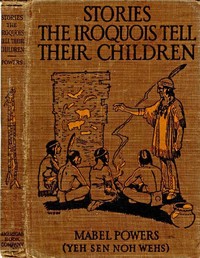
Stories the Iroquois Tell Their Children — A Closer Reading
(1 User reviews)
216
Project Gutenberg
2007
Not confirmed
Iroquois Indians -- Folklore
Readers of public-domain and historical texts
Project Gutenberg digital edition
en
Edition facts
Words
29,594
Reading time
129 min
Text sections
5
Before opening Stories the Iroquois Tell Their Children — A Closer Reading, the edition data offers a quick orientation: 29,594 words, 2 hr 9 min estimated reading time, and 5 detected text sections.
The text analysis averages about 14.3 words per sentence, while the detected sections provide another way to judge how the source is divided.
Project Gutenberg metadata also associates the work with “Iroquois Indians -- Folklore,” connecting these edition facts with the source record’s subject description.
Source:
Project Gutenberg record #22096
Mabel Powers retells Iroquois folktales collected from tribal storytellers, featuring animal characters, natural phenomena, and moral lessons. The opening explains how she earned the name Yeh Sen Noh Wehs (Story-teller) and describes Iroquois storytelling customs.
Editorial Edition Score
4.7/5
★★★★★
★★★★★
Calculated from edition completeness, EPUB availability, text structure and catalogue metadata. Not a user rating.
How this score is calculated
- Description quality20 pts
- Title & short description10 pts
- Source metadata20 pts
- Text length15 pts
- Chapters / structure15 pts
- EPUB file integrity20 pts
Total of 100 points, scaled to a 2.5-5.0 range. Editions with an empty description or a missing EPUB file are not scored.
Edition quality
Read the Text
There were many days when _Yeh sen noh wehs_ told her stories, but none were told in return. Few members of the tribes--these usually the oldest--could remember the stories "they used to tell."
Sometimes _Yeh sen noh wehs_ heard a story as she trudged along a furrow, beside a ragged Indian who was plowing with a more ragged-looking team. Or she would listen as she helped an Indian woman prepare the evening meal, pick berries, or gather nuts.
Sometimes, as _Yeh sen noh wehs_ sat by a fire down in the depths of a beautiful wood, and watched the smoke of the sacred medicine rise, a medicine man would tell her a story; or an Indian woman would drop a word, as she sat at her door weaving baskets or making beadwork.
These stories _Yeh sen noh wehs_ has made into a story book, that they might not be lost and forgotten; that all the Iroquois Red Children and their children's children might know and tell them, and that Paleface children might learn them as well.
The American children have no fairies of their own. They must borrow their fairies from children of other nations. _Yeh sen noh wehs_ thought it very sad, so she put a magic feather in her cap, and winged moccasins on her feet. Then she went on the chase for real American wonder stories, and for real American fairies.
Had there not been a feather in the magic cap she wore, _Yeh sen noh wehs_ would not have found them. But the feather pointed the way to the Nature Wonder Trail, and there she caught a glimpse of the "Little People,"--the only true American fairies.
All children who live close to Mother Earth come to know and to see the fairies of the flowers, the woods, the rocks, and the waters.
These fairies the Iroquois call the _Jo gah oh_, or "Little People," because they are so small. The Little People can do wonderful things. Whatever they wish, they can do. They can fly through the air. They can dart under or through the water, into the earth and through the rocks, as they please, for they wear invisible moccasins and travel in winged canoes.
Their wee babies are carried on the little mothers' backs,--just like the Indian's papoose. The little fathers have wonderful winged bows and arrows, that can shoot any distance they wish.
The Little People bring good luck to the Indians. Whatever Indian boys and girls wish for,--if they wish hard enough, the _Jo gah oh_ will bring to them.
It is said that there are three tribes of these Little People,--those that live in the rocks beside streams and lakes, those that hover near the flowers and plants, and those that guard the dark places under the earth.
The rock Little People are very strong. They can uproot large trees and can hurl great rocks. Sometimes they dare the Indians to a test of strength with them. They also like to play ball with stones.
The Red Children fear the Stone Throwers, as they call them. But they love the little folk that help the flowers to blossom, and the fruit and grains to grow and ripen.
They remember these Little People in their Feasts of Thanksgiving, for do the _Jo gah oh_ not help the sweet waters of the maple to flow? Do they not whisper to the growing seeds and show the way to the light? Do they not guide the runners of the strawberries, turn the blossoms to the sun, and paint the berries red? They also tint the grains, and give to the corn its good taste.
A third tribe of Little People dwell under the earth. They guard the sacred white buffaloes, and keep the serpent monsters that live in the darkness below from coming to the surface to the Red Children.
There are trails that lead out to the sunlight, but the Little People guard them close, although sometimes a great serpent will find the trail of a spring, and will follow it and poison the waters.
Often, at night, these elves of the dark come to the upper world to dance with the other Little People.
Wherever you find a tree in a deep, dark part of the wood, around which no grass will grow, there you may be sure a dance ring has been formed. There the Little People have danced till the moon dropped out of the sky.
The old-time Indians say that long, long ago, the Little People made a law that stories must not be told in summer.
Mabel Powers opens by describing how she was adopted into an Iroquois tribe and given the name Yeh Sen Noh Wehs, meaning “Story-teller.” She explains that the stories were told to her by named narrators such as Edward Cornplanter and William Patterson, each identified by clan and English name. The introductory section also details Iroquois customs of giving thanks and the role of the “Little People” in their lore.
This framing establishes the collection as a retelling rather than original fiction, and it signals that the tales are meant to be spoken aloud. Readers should note the careful attribution: Powers does not claim authorship but positions herself as a conduit for oral tradition.
How the Stories Came to Be
The opening pages recount Powers’s journey to becoming a storyteller. She writes that the Iroquois welcomed her to their lodge fires and shared their narratives. The acknowledgment lists nine storytellers by their Iroquois names, English names, and clans—such as “Edward Cornplanter (So son do wah—'Great Night') Seneca Wolf.” This specificity grounds the collection in real oral sources.
Powers also explains that the Iroquois have a special time for storytelling: “Story-telling Time” is a distinct section, suggesting that tales were told only in winter or after certain rituals. The inclusion of a “Thanksgiving” address shows how gratitude permeates Iroquois culture. Readers should pay attention to these cultural notes, as they provide context for the wonder stories that follow.
Animal Councils and Natural Explanations
Several tales explain natural phenomena through animal councils. In “Why the Chipmunk has Black Stripes,” the animals debate whether to have day, night, or both. The chipmunk chatters “We will have light—and then night” until dawn arrives, and the bear’s angry swipe leaves stripes on its back. The story uses repetition and a clear moral: persistence wins.
Similarly, “Why the Turkey Buzzard Got His Suit” and “Why the Partridge drums” offer origin stories for animal traits. These tales often feature a contest or trick. The language is simple and rhythmic, suited for oral telling. Readers will notice that animals speak and act like humans, but their motivations are tied to observable features—like the chipmunk’s stripes or the woodpecker’s drilling.
Human Lessons and Quarrels
Not all stories are about animals. “How Two Indian Boys Settled a Quarrel” features Flying Squirrel and Lightning Bow, who argue over a foot race. Their mother, White Fawn, instructs them to set up sticks in the woods and leave their quarrel there. The sticks’ eventual position will determine who was right. This tale embeds a lesson about patience and letting go of anger.
Other stories like “How a Boy was Cured of Boasting” and “How an Indian Boy won his Name” show children learning through consequences. The settings are specific: Singing River, the Moon of Berries, snow-snakes made of polished wood. These details root the tales in Iroquois life. Readers should note how the stories blend entertainment with instruction, often without explicit moralizing.
The Role of the Storyteller
Powers repeatedly emphasizes that she is retelling, not inventing. The foreword by the chiefs and the acknowledgment list of storytellers reinforce authenticity. She also includes a section on “How the Iroquois give Thanks,” which describes a formal address of gratitude to the earth, waters, and animals. This suggests that storytelling is part of a larger spiritual practice.
The collection ends with “Iroquois Fairy Stories,” which involve magical beings like the Little People. These tales are shorter and more whimsical, but they maintain the same oral cadence. Readers should consider how the structure—introductory material, wonder stories, fairy stories—mirrors a storytelling session, moving from cultural context to entertainment.
As you read, notice how each story begins with a specific detail—a character’s name, a place, or a natural feature—that anchors the tale in Iroquois geography and custom. The repetition of phrases like “Chee, chee, chee!” and the use of dialogue give the text a spoken quality. Pay attention to the acknowledgments and introductory sections: they are not mere front matter but essential context for understanding the stories as living oral traditions.
Reading how Yeh Sen Noh Wehs gathered tales by firelight, I remembered sitting with my grandmother, her voice turning ordinary evenings into something older. Stories the Iroquois Tell Their Children holds that same patient quiet. It reminded me of meeting Vikram and the Vampire; or, Tales of Hindu Devilry — Story, Setting & Ideas years ago—both collections feel like whispered inheritances, not just stories, but softly passed-down ways of seeing.
-

Matthew Garcia - 1 month ago
An interesting collection of Iroquois legends, offering a unique cultural perspective. The stories are simple and often involve animals and nature, which children may enjoy. However, some tales feel repetitive in their themes, and the language can be somewhat dry. Still, it's a worthwhile read for cultural education and bedtime storytelling. -
Kathryn Black - 1 month ago
The stories themselves are important culturally, but the writing lacks the storytelling flair needed to truly captivate modern children. The prose is often flat, and the tales feel more like summaries than fully realized narratives. Additionally, some cultural elements are not explained well, leaving readers confused. There are better resources for introducing children to Native American folklore. -
Matthew Jones - 3 weeks ago
This book is a fascinating glimpse into the rich oral traditions of the Iroquois people. The stories are filled with nature, animals, and moral lessons, beautifully retold with respect and authenticity. It's an educational and engaging read for both children and adults, offering valuable insights into Native American culture. A must-have for anyone interested in folklore and indigenous wisdom.
Reader reflection
Record your reading impressions
A brief reflection can help important ideas stay with you longer.
Your progress
0
/
10
2
What was your overall reaction to the book?
3
Would you encourage someone else to read it?
4
How demanding did the text feel?
5
How original did the book feel?
6
How clear did the writing feel?
7
How useful did the reading feel?
8
Did any part of the book feel personally relevant?
9
What changed or sharpened your thinking?
10

Lucas Clark
3 weeks ago