1

The cock, the mouse, and the little red hen — Themes and Context
(10 User reviews)
1663
Project Gutenberg
2009
Not confirmed
Folklore; Animals -- Juvenile fiction; Children's stories
Readers of public-domain and historical texts
Project Gutenberg digital edition
en
Edition facts
Words
4,942
Reading time
22 min
Text sections
2
This digital edition of The cock, the mouse, and the little red hen — Themes and Context is described by source-level measurements including 4,942 words, 22 min estimated reading time, and 2 detected text sections.
The text analysis averages about 21.5 words per sentence, while the detected sections provide another way to judge how the source is divided.
Project Gutenberg metadata also associates the work with “Folklore,” connecting these edition facts with the source record’s subject description.
Source:
Project Gutenberg record #29980
This editorial note examines the structural contrasts, recurring animal imagery, and movement between domestic and wild spaces in Félicité Lefèvre's retelling of 'The Cock, the Mouse, and the Little Red Hen,' based on the opening scenes.
Editorial Edition Score
4.5/5
★★★★★
★★★★★
Calculated from edition completeness, EPUB availability, text structure and catalogue metadata. Not a user rating.
How this score is calculated
- Description quality20 pts
- Title & short description10 pts
- Source metadata20 pts
- Text length15 pts
- Chapters / structure15 pts
- EPUB file integrity20 pts
Total of 100 points, scaled to a 2.5-5.0 range. Editions with an empty description or a missing EPUB file are not scored.
Edition quality
Read the Text
Produced by Louise Hope, David Edwards and the Online Distributed Proofreading Team at https://www.pgdp.net (This file was produced from images generously made available by The Internet Archive)
[This e-text comes in two forms: Latin-1 and ASCII. Use the one that works best on your text reader. In the Latin-1 version, the author's name is written with French accents. There are no other significant differences.
The story is given twice: first with line breaks, punctuation and paragraph indentation as in the original, and then as an unformatted narrative.]
AND THE LITTLE RED HEN
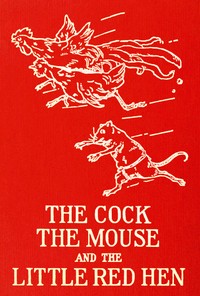
_The_ COCK, _The_ MOUSE _and the_ LITTLE RED HEN
An Old Tale Retold _by_ FÉLICITÉ LEFÈVRE
With 24 Illustrations _by_ TONY SARG
MACRAE · SMITH · COMPANY Philadelphia
To My Nieces CECILIA GARRY and NELLY MELVILLE and to my little friend HARFORD LURY this book is dedicated with my love
4511 Nineteenth Printing _Manufactured in the United States of America_
AND THE LITTLE RED HEN
Once upon a time there was a hill, and on the hill there was a pretty little house.
It had one little green door, and four little windows with green shutters, and in it there lived
On another hill close by there was another little house. It was very ugly.
It had a door that wouldn't shut,
and two broken windows, and all the paint was off the shutters
And in this house there lived
A BOLD BAD FOX and FOUR BAD LITTLE FOXES
One morning these four bad little foxes
came to the big bad Fox and said:
"Oh, Father, we're so hungry!"
"We had nothing to eat yesterday," said one.
"And scarcely anything the day before," said another.
"And only half a chicken the day before that," said the third.
"And only two little ducks the day before that," said the fourth.
The big bad Fox shook his head for a long time, for he was thinking.
At last he said in a big gruff voice:
"On that hill over there I see a house. And in that house there lives a Cock."
"And a Mouse," screamed two of the little foxes.
"And a little Red Hen," screamed the other two.
"And they are nice and fat," went on the big bad Fox. "This very day, I'll take my great sack, and I will go up that hill, and in at that door, and into my sack I will put the Cock, and the Mouse, and the little Red Hen."
"I'll make a fire to roast the Cock," said one little fox.
"I'll put on the saucepan to boil the Hen," said the second.
"And I'll get the frying pan to fry the Mouse," said the third.
"And I'll have the biggest helping when they are all cooked," said the fourth, who was the greediest of all.
So the four little foxes jumped for joy, and the big bad Fox went to get his sack ready to start upon his journey.
But what was happening to the Cock and the Mouse, and the little Red Hen, all this time?
Well, sad to say, the Cock and the Mouse had both got out of bed on the wrong side that morning.
The Cock said the day was too hot, and the Mouse grumbled because it was too cold.
They came grumbling down to the kitchen, where the good little Red Hen, looking as bright as a sunbeam, was bustling about.
"Who'll get some sticks to light the fire with?" she asked.
"_I_ shan't," said the Cock.
"_I_ shan't," said the Mouse.
"Then I'll do it myself," said the little Red Hen.
So off she ran to get the sticks.
"And now, who'll fill the kettle from the spring?" she asked.
"_I_ shan't," said the Cock.
"_I_ shan't," said the Mouse.
"Then I'll do it myself," said the little Red Hen. And off she ran to fill the kettle.
"And who'll get the breakfast ready?" she asked, as she put the kettle on to boil.
"_I_ shan't," said the Cock.
"_I_ shan't," said the Mouse.
"I'll do it myself," said the little Red Hen.
All breakfast time the Cock and the Mouse quarrelled and grumbled. The Cock upset the milk jug, and the Mouse scattered crumbs upon the floor
"Who'll clear away the breakfast?" asked the poor little Red Hen, hoping
they would soon leave off being cross.
"_I_ shan't," said the Cock.
"_I_ shan't," said the Mouse.
"Then I'll do it myself," said the little Red Hen.
So she cleared everything away, swept up the crumbs, and brushed up the fireplace.
"And now, who'll help me to make the beds?"
"_I_ shan't," said the Cock.
"_I_ shan't," said the Mouse.
"Then I'll do it myself," said the little Red Hen.
And she tripped away upstairs.
The story opens with a stark contrast between two houses on two hills: one pretty, with a green door and green shutters, home to the Cock, the Mouse, and the Little Red Hen; the other ugly, with a broken door and windows, home to a bold bad Fox and four bad little foxes. This binary setting establishes a clear moral geography. The narrative then shifts to the foxes' hunger, expressed through a descending scale of meals—nothing, scarcely anything, half a chicken, two little ducks—before the Fox decides to sack the three animals. Meanwhile, the Cock and Mouse have gotten out of bed on the wrong side, grumbling about the weather, while the Little Red Hen is already working in the kitchen. The structure alternates between the two households, building tension through parallel scenes.
Houses as Moral Markers
The opening description of the two houses is not merely decorative. The pretty house has one little green door, four little windows with green shutters, and is inhabited by the three protagonists. The ugly house has a door that won't shut, two broken windows, and paint peeling off the shutters. This physical contrast immediately signals a moral opposition: order versus neglect, safety versus danger. The repetition of 'little' for the good house and the lack of such qualifiers for the bad house reinforces the scale of the conflict. The houses are not just settings but extensions of their inhabitants' characters.
Hunger and the Foxes' Calculus
The four little foxes list their recent meals in a descending sequence: 'nothing to eat yesterday,' 'scarcely anything the day before,' 'only half a chicken,' 'only two little ducks.' This precise enumeration gives their hunger a comic yet menacing specificity. The big bad Fox responds by naming his intended prey—Cock, Mouse, Little Red Hen—and each little fox claims a cooking method: roasting, boiling, frying. The greediest demands the biggest helping. This scene establishes a clear predatory logic and a division of labor among the foxes, setting up the central threat.
The Hen's Quiet Industry
While the foxes plot and the Cock and Mouse grumble, the Little Red Hen is already in the kitchen, working. The text notes that the Cock and Mouse 'came grumbling down to the kitchen, where the good little Red Hen, looking...'—the sentence is cut off in the excerpt, but the pattern is clear: the Hen is the only one engaged in productive activity. This early contrast in behavior foreshadows the traditional tale's moral about diligence. The Hen's silence amid the complaints of her housemates is a structural counterpoint to the foxes' noisy plotting.
Movement Between Hills
The narrative moves deliberately between the two hills: the foxes' house on one, the animals' house on the other. The Fox declares he will 'go up that hill, and in at that door.' This journey is not yet completed in the excerpt, but the repeated phrase 'on that hill over there' emphasizes the spatial separation. The story's structure depends on this back-and-forth movement, creating anticipation for the Fox's approach. The hills also serve as a visual and symbolic boundary between safety and danger, domestic order and wild appetite.
Readers may find it useful to track how the narrative shifts between the two houses and how each character's actions—or inactions—contribute to the impending crisis. The opening establishes a clear pattern of contrast and parallelism that likely continues throughout the tale. Pay attention to how the Little Red Hen's role develops in relation to the grumbling Cock and Mouse, and whether the foxes' plan unfolds as stated.
This old story’s careful boundary between the warm barn and the wild hedge brought back my grandmother’s kitchen, where the door always stayed cracked. I remembered how Chinese fables and folk stories — Themes and Context once made me feel that same quiet tug—a small creature’s safe place, and the hush just past the threshold, where every shadow held a question.
Dylan Hernandez
3 weeks agoTheodore Allen
1 month agoLucas Carter
3 weeks agoMichael Robinson
3 weeks ago-

Christina Hines - 1 month ago
The Cock, the Mouse and the Little Red Hen is a charming children's story that teaches valuable lessons about teamwork and bravery. The illustrations (if present) and simple narrative make it perfect for young readers, and the classic tale is retold with warmth and humor. The repetitive structure engages kids and encourages participation, making it a wonderful bedtime story. -
Elizabeth Reed - 4 weeks ago
This classic tale is simple and sweet, but the story feels a bit thin compared to modern children's books. The message about helping others is clear, but the plot is very predictable. Still, for a nostalgic trip or a quick read with a toddler, it works fine. -
Crystal Hernandez - 1 week ago
While the story is a classic, this edition feels outdated and lacks engaging illustrations that modern children would find appealing. The language is simple but not particularly imaginative, and the moral is delivered in a heavy-handed way. There are many better contemporary versions of this tale with more visual appeal and creativity.
Reader reflection
Record your reading impressions
A brief reflection can help important ideas stay with you longer.
Your progress
0
/
10
2
How did the book work for you overall?
3
Is this a title you would suggest to others?
4
How easy was the book to follow?
5
How did the pace of the book feel?
6
Did you gain anything practical from the text?
7
Did any part of the book feel personally relevant?
8
Do you expect to return to this book?
9
Which lesson or insight stayed with you?
10




Matthew Jackson
1 month ago