
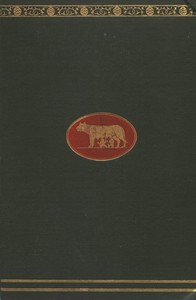
The Makers of Modern Rome, in Four Books by Mrs. Oliphant
Mrs. Oliphant's The Makers of Modern Rome is a history book that feels like a guided tour through a city's soul. She doesn't start with Romulus and Remus; she starts after the empire has crumbled. The old marble is cracked, the legions are gone, and what's left is a shadow. Then, she introduces us to the architects of the next thousand years.
The Story
Split into four parts, the book follows the transformation of Rome from a pagan capital to the center of Western Christianity. We meet figures like Pope Gregory the Great, who organized the church and sent missionaries across Europe, essentially becoming a spiritual CEO for a fractured continent. We see how monks preserved knowledge, how bishops negotiated with invading kings, and how the very idea of "Rome" was repurposed. It's not a dry list of dates. It's a story of survival and reinvention, showing how a physical city's decay coincided with the growth of its immense spiritual influence.
Why You Should Read It
Oliphant writes with a novelist's eye for character and moment. She makes you feel the dust in the abandoned forums and the quiet determination in a monk's cell. What I love is how she highlights the human-scale decisions that had world-changing consequences. This period, often called the "Dark Ages," is presented not as a blank space but as a time of intense, creative rebuilding. She connects the dots between ancient philosophy, early Christian thought, and medieval politics in a way that's surprisingly clear. You finish understanding not just what happened, but why European culture developed the way it did.
Final Verdict
This is a perfect book for anyone curious about the bridge between the ancient and medieval worlds. If you enjoyed books like Pillars of the Earth for its sense of building something lasting, you'll find a similar satisfaction here, but with real historical figures. It's also great for travelers who've been to Rome and wondered about the layers beyond the Colosseum. Fair warning: it's a 19th-century work, so the prose is elegant but denser than a modern pop history book. Think of it as a rich, rewarding conversation with a very knowledgeable and passionate guide. You'll come away seeing history—and the city of Rome—in a completely new light.
You are viewing a work that belongs to the global public domain. You do not need permission to reproduce this work.
Mason Thomas
1 year agoHaving read this twice, the arguments are well-supported by credible references. Exactly what I needed.
Edward Miller
10 months agoFive stars!
Mason Brown
1 year agoClear and concise.
Ashley Sanchez
1 year agoSimply put, the flow of the text seems very fluid. This story will stay with me.








Amanda Taylor
1 year agoSimply put, the author's voice is distinct and makes complex topics easy to digest. Don't hesitate to start reading.