1

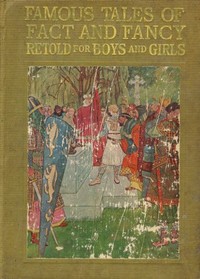
Famous Tales of Fact and Fancy Myths and Legends of the Nations of the World Retold for Boys and Girls — Story, Setting & Ideas
(6 User reviews)
1599
Project Gutenberg
2008
Not confirmed
Mythology -- Juvenile literature; Legends -- Juvenile literature
Readers of public-domain and historical texts
Project Gutenberg digital edition
en
Edition facts
Words
86,549
Reading time
377 min
Text sections
10
For Famous Tales of Fact and Fancy Myths and Legends of the Nations of the World Retold for Boys and Girls — Story, Setting & Ideas, the stored edition analysis reports 86,549 words, 6 hr 17 min estimated reading time, and 10 detected text sections.
The text analysis averages about 21.5 words per sentence, while the detected sections provide another way to judge how the source is divided.
Project Gutenberg metadata also associates the work with “Mythology -- Juvenile literature,” connecting these edition facts with the source record’s subject description.
Source:
Project Gutenberg record #24935
Logan Marshall's collection retells myths and legends from Greek, Roman, Teutonic, and other traditions for young readers. The preface frames these stories as a 'heritage of wealth,' while the excerpts show varied narrative voices—from formal epic to direct speech—and shifts in pacing between summary and dramatic scene.
Editorial Edition Score
4.9/5
★★★★★
★★★★★
Calculated from edition completeness, EPUB availability, text structure and catalogue metadata. Not a user rating.
How this score is calculated
- Description quality20 pts
- Title & short description10 pts
- Source metadata20 pts
- Text length15 pts
- Chapters / structure15 pts
- EPUB file integrity20 pts
Total of 100 points, scaled to a 2.5-5.0 range. Editions with an empty description or a missing EPUB file are not scored.
Edition quality
Read the Text
Prometheus had dreamed. They learned to cook and to domesticate animals and to till the fields and to mine precious metals and melt them into tools and weapons. And they came out of their dark and gloomy caves and built for themselves beautiful houses of wood and stone. And instead of being sad and unhappy they began to laugh and sing. "Behold, the Age of Gold has come again," they said.
But Jupiter was not so happy. He saw that men were gaining daily greater power, and their very prosperity made him angry.
"That young Titan!" he cried out, when he heard what Prometheus had done. "I will punish him."
But before punishing Prometheus he decided to vex the children of men. So he gave a lump of clay to his blacksmith, Vulcan, and told him to mold it in the form of a woman. When the work was done he carried it to Olympus.
Jupiter called the other gods together, bidding them give her each a gift. One bestowed upon her beauty, another, kindness, another, skill, another, curiosity, and so on. Jupiter himself gave her the gift of life, and they named her Pandora, which means "all-gifted."
Then Mercury, the messenger of the gods, took Pandora and led her down the mountain side to the place where Prometheus and his brother were living.
"Epimetheus, here is a beautiful woman that Jupiter has sent to be your wife," he said.
Epimetheus was delighted and soon loved Pandora very deeply, because of her beauty and her goodness.
Now Pandora had brought with her as a gift from Jupiter a golden casket. Athena had warned her never to open the box, but she could not help wondering and wondering what it contained. Perhaps it held beautiful jewels. Why should they go to waste?
At last she could not contain her curiosity any longer. She opened the box just a little to take a peep inside. Immediately there was a buzzing, whirring sound, and before she could snap down the lid ten thousand ugly little creatures had jumped out. They were diseases and troubles, and very glad they were to be free.
All over the earth they flew, entering into every household, and carrying sorrow and distress wherever they went.
How Jupiter must have laughed when he saw the result of Pandora's curiosity!
Soon after this the god decided that it was time to punish Prometheus. He called Strength and Force and bade them seize the Titan and carry him to the highest peak of the Caucasus Mountains. Then he sent Vulcan to bind him with iron chains, making arms and feet fast to the rocks. Vulcan was sorry for Prometheus, but dared not disobey.
So the friend of man lay, miserably bound, naked to the winds, while the storms beat about him and an eagle tore at his liver with its cruel talons. But Prometheus did not utter a groan in spite of all his sufferings. Year after year he lay in agony, and yet he would not complain, beg for mercy or repent of what he had done. Men were sorry for him, but could do nothing.
Then one day a beautiful white cow passed over the mountain, and stopped to look at Prometheus with sad eyes.
"I know you," Prometheus said. "You are Io, once a fair and happy maiden dwelling in Argos, doomed by Jupiter and his jealous queen to wander over the earth in this guise. Go southward and then west until you come to the great river Nile. There you shall again become a maiden, fairer than ever before, and shall marry the king of that country. And from your race shall spring the hero who will break my chains and set me free."
Centuries passed and then a great hero, Hercules, came to the Caucasus Mountains. He climbed the rugged peak, slew the fierce eagle, and with mighty blows broke the chains that bound the friend of man.
THE LABORS OF HERCULES
Before the birth of Hercules Jupiter had explained in the council of the gods that the first descendant of Perseus should be the ruler of all the others of his race. This honor was intended for the son of Perseus and Alcmene; but Juno was jealous and brought it about that Eurystheus, who was also a descendant of Perseus, should be born before Theseus. So Eurystheus became king in Mycene, and the later-born Hercules remained inferior to him.
Now Eurystheus watched with anxiety the rising fame of his young relative, and called his subject to him, demanding that he carry through certain great tasks or labors. When Hercules did not immediately obey, Jupiter himself sent word to him that he should fulfill his service to the King of Greece.
Logan Marshall's Famous Tales of Fact and Fancy opens with a preface that positions mythology as a 'truer index to the life of its people' than history, claiming these stories have 'stood the test of time.' The collection draws on sources such as Gustav Schwab's German retellings and classical epics, but the editorial voice is consistently that of a translator-editor addressing 'the children of America.' The excerpts reveal a notable range in narrative pace: the preface moves in broad, declarative statements, while later passages—like Iphigenia's plea to her father—shift into sustained, emotionally charged dialogue. This variation suggests the volume alternates between summarizing mythic arcs and dwelling on key dramatic moments, a technique that may help sustain a young reader's attention across nearly 87,000 words.
The Editor's Framing Voice
Marshall's preface establishes a clear rhetorical stance: myths are not mere fictions but 'an integral part of our own civilization.' He uses parallel constructions ('Any understanding of German civilisation would be incomplete without...') to assert cultural significance, and he directly addresses his audience as 'the children of America.' This framing is notably earnest and educational, treating the reader as a participant in a shared heritage. The language is formal but not stiff—phrases like 'rich and gorgeous wonderland' aim to enchant. Yet the editor also acknowledges the stories' 'historic basis is slight,' a concession that keeps the preface from overpromising historical accuracy. This dual tone—celebratory yet measured—shapes how the tales that follow are introduced.
Shifts in Narrative Pace
The excerpts demonstrate clear changes in tempo. The preface moves briskly through general claims, but the Iphigenia passage slows to a near-stop for direct speech. Iphigenia's plea—'I would, my father, that I had the voice of Orpheus'—unfolds over several paragraphs, with repeated appeals ('O my father, I am thy child; slay me not before my time'). The narrator then accelerates into summary: 'But the king was sore distracted; knowing not what he should say or do, for a terrible necessity was upon him.' This alternation between scenic dialogue and compressed narration is a hallmark of the retelling style. Elsewhere, the Achilles episode uses brisk action ('Then Arthur drew out the sword and was proclaimed king') to mark turning points. Readers attentive to rhythm will notice how Marshall uses these shifts to control emotional intensity.
Direct Speech as a Window into Character
The excerpts rely heavily on quoted speech to reveal character and advance conflict. Iphigenia's address to her father is the longest sustained passage: she recalls their past intimacy ('I was the first to call thee father'), appeals to her baby brother Orestes, and ends with a direct plea. The queen's outburst—'Tell me now, dost thou purpose to slay thy daughter and mine?'—is similarly blunt. Achilles, by contrast, speaks in measured declarations: 'I learnt from Chiron, who was the most righteous of men, to be true and honest.' These voices are not strongly differentiated in idiom—all use formal, slightly archaic English—but their emotional registers differ. The effect is to make key moments feel immediate, even as the surrounding narration remains distanced. This technique likely helps young readers connect with figures who might otherwise seem remote.
Readers approaching this collection should note that the editor's voice is as much a character as any hero. Marshall's prefaces and transitions shape how each myth is received, and his choices about when to summarize and when to dramatize create a distinctive reading rhythm. Pay attention to the moments where the narrative slows for direct speech—these are where the emotional weight of the story is concentrated. The volume rewards those who read not just for plot but for the craft of retelling itself.
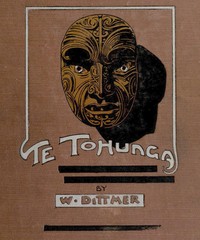
There’s a particular hush in these old retellings, as if the stories are being passed hand-to-hand. That same quiet reverence finds its echo in Te Tohunga: The ancient legends and traditions of the Maoris — Inside the Classic, where the distance between myth and memory feels even shorter. I keep thinking how these voices, though from different shores, share that patient cadence of things worth remembering.
Elijah Young
3 weeks agoJoseph Wilson
1 month agoMadison Adams
3 weeks agoCamila White
1 month ago-

Jennifer Newton - 4 weeks ago
A decent collection of myths and legends from around the world, with a good variety of cultures represented. The retellings are simplified for younger readers, which is effective, but sometimes the stories lose their original richness. The pacing is mostly good, though a few tales feel rushed. Still, it's a useful educational tool for introducing kids to world mythology. -
Kathleen Mills - 2 weeks ago
While the idea is commendable, the execution falls short. The retellings are oversimplified to the point of losing the depth and nuance of the original myths. The prose is choppy and lacks literary charm. Some cultural details are inaccurately portrayed, which is concerning for an educational book. There are more faithful and engaging myth collections available for children. -
Brandon Hubbard - 2 weeks ago
This book is a wonderful introduction to world mythology for children. The stories are retold in an engaging and accessible manner, covering a wide range of cultures from Greek to Norse to African. The language is vivid, and the moral lessons are clear without being preachy. It's an invaluable resource for parents and educators looking to broaden children's cultural horizons.
Reader reflection
What was your reading experience?
Capture what you thought, learned, and would like to remember.
Your progress
0
/
10
2
Did this book hold your interest?
3
Would you recommend this book to another reader?
4
How demanding did the text feel?
5
How much did the book move you?
6
How closely did the book connect with your experience?
7
How valuable was this book for your own interests?
8
How original did the book feel?
9
Which lesson or insight stayed with you?
10





Anthony Baker
2 weeks ago