1

Myths and Legends of Our Own Land — Complete — Text and Context
(1 User reviews)
178
Project Gutenberg
2004
Not confirmed
Folklore -- United States
Readers of public-domain and historical texts
Project Gutenberg digital edition
en
Edition facts
Words
157,958
Reading time
687 min
Text sections
21
This digital edition of Myths and Legends of Our Own Land — Complete — Text and Context is described by source-level measurements including 157,958 words, 11 hr 27 min estimated reading time, and 21 detected text sections.
The text analysis averages about 26.2 words per sentence, while the detected sections provide another way to judge how the source is divided.
Project Gutenberg metadata also associates the work with “Folklore -- United States,” connecting these edition facts with the source record’s subject description.
Source:
Project Gutenberg record #6615
Charles M. Skinner's 1896 collection of American folklore, organized by region, blends colonial history, Native American legends, and supernatural tales. The excerpts reveal a focus on local geography and moralistic narratives, often with skeptical or ironic framing.
Editorial Edition Score
4.9/5
★★★★★
★★★★★
Calculated from edition completeness, EPUB availability, text structure and catalogue metadata. Not a user rating.
How this score is calculated
- Description quality20 pts
- Title & short description10 pts
- Source metadata20 pts
- Text length15 pts
- Chapters / structure15 pts
- EPUB file integrity20 pts
Total of 100 points, scaled to a 2.5-5.0 range. Editions with an empty description or a missing EPUB file are not scored.
Edition quality
Read the Text
d. On the day of his revenge Shandaken left his ancient dwelling-place, and his camp-fires never glimmered afterward on the front of Ontiora.
CONDEMNED TO THE NOOSE
Ralph Sutherland, who, early in the last century, occupied a stone house a mile from Leeds, in the Catskills, was a man of morose and violent disposition, whose servant, a Scotch girl, was virtually a slave, inasmuch as she was bound to work for him without pay until she had refunded to him her passage-money to this country. Becoming weary of bondage and of the tempers of her master, the girl ran away. The man set off in a raging chase, and she had not gone far before Sutherland overtook her, tied her by the wrists to his horse's tail, and began the homeward journey. Afterward, he swore that the girl stumbled against the horse's legs, so frightening the animal that it rushed off madly, pitching him out of the saddle and dashing the servant to death on rocks and trees; yet, knowing how ugly-tempered he could be, his neighbors were better inclined to believe that he had driven the horse into a gallop, intending to drag the girl for a short distance, as a punishment, and to rein up before he had done serious mischief. On this supposition he was arrested, tried, and sentenced to die on the scaffold.
The tricks of circumstantial evidence, together with pleas advanced by influential relatives of the prisoner, induced the court to delay sentence until the culprit should be ninety-nine years old, but it was ordered that, while released on his own recognizance, in the interim, he should keep a hangman's noose about his neck and show himself before the judges in Catskill once every year, to prove that he wore his badge of infamy and kept his crime in mind. This sentence he obeyed, and there were people living recently who claimed to remember him as he went about with a silken cord knotted at his throat. He was always alone, he seldom spoke, his rough, imperious manner had departed. Only when children asked him what the rope was for were his lips seen to quiver, and then he would hurry away. After dark his house was avoided, for gossips said that a shrieking woman passed it nightly, tied at the tail of a giant horse with fiery eyes and smoking nostrils; that a skeleton in a winding sheet had been found there; that a curious thing, somewhat like a woman, had been known to sit on his garden wall, with lights shining from her finger-tips, uttering unearthly laughter; and that domestic animals reproached the man by groaning and howling beneath his windows.
These beliefs he knew, yet he neither grieved, nor scorned, nor answered when he was told of them. Years sped on. Every year deepened his reserve and loneliness, and some began to whisper that he would take his own way out of the world, though others answered that men who were born to be hanged would never be drowned; but a new republic was created; new laws were made; new judges sat to minister them; so, on Ralph Sutherland's ninety-ninth birthday anniversary, there were none who would accuse him or execute sentence. He lived yet another year, dying in 1801. But was it from habit, or was it in self-punishment and remorse, that he never took off the cord? for, when he drew his last breath, though it was in his own house, his throat was still encircled by the hangman's rope.
Intermarriages between white people and red ones in this country were not uncommon in the days when our ancestors led as rude a life as the natives, and several places in the Catskills commemorate this fact. Mount Utsayantha, for example, is named for an Indian woman whose life, with that of her baby and her white husband, was lost there. For the white men early found friends among these mountains. As far back as 1663 they spared Catherine Dubois and her three children, after some rash spirits had abducted them and carried them to a place on the upper Walkill, to do them to death; for the captives raised a Huguenot hymn and the hearts of their captors were softened.
Charles M. Skinner's Myths and Legends of Our Own Land (1896) organizes American folklore by region, from the Hudson Valley to New England. The excerpts show a work that draws on colonial history, Native American stories, and supernatural anecdotes, often with a moralistic or ironic tone. Skinner's narratorial voice is evident in asides like 'for old Jonathan was fond of money, and the lack of it distressed him worse than a conscience,' which frames the tale of General Moulton's pact with the devil. The catalog subject 'Folklore -- United States' is accurate, but the excerpts reveal a stronger emphasis on European-derived legends and historical figures than on indigenous traditions.
Regional Organization and Local Geography
The table of contents groups tales by region, such as 'The Hudson and Its Hills' and 'Tales of Puritan Land.' This structure ties each legend to a specific location, like Spuyten Duyvil or the Wissahickon. In 'General Moulton and the Devil,' the setting is Hampton, New Hampshire, and the devil's fifteen-minute deadline to reach Portsmouth anchors the story in real geography. Skinner often includes place-name origins, as in 'Why Spuyten Duyvil Is So Named.' This regional framing suggests the book functions partly as a travel companion or local history, though the excerpts do not confirm how consistently this is applied across all sections.
Moral Ambiguity and Skeptical Tone
Skinner's narratorial comments introduce moral ambiguity. In the tale of Goody Cole, the victim is freed but 'dark suspicion hung about the beldam to the last,' and her body is staked after death. The narrator does not explicitly condemn the villagers, instead reporting events with a detached, almost clinical tone. In 'General Moulton and the Devil,' the general's greed is clear, but the devil is portrayed as businesslike, checking his watch and drinking 'blazing dram.' Skinner writes that Moulton 'was a little slow to recover his wits,' a wry understatement. This skeptical, sometimes ironic voice distinguishes the collection from purely credulous folklore anthologies.
Recurring Motifs: Pacts, Rings, and Vengeance
Several excerpts feature supernatural pacts or bargains. General Moulton sells his soul for monthly gold, and the devil's demand to 'sign this paper' echoes the Faust legend. The motif of a wedding ring appears in the same tale, where the dead wife's ring is taken from the new bride. In the Goody Cole story, a woman's reason is restored when her husband rides to free an accused witch, but the ring is absent. Vengeance or retribution is common: the stake through Goody Cole's heart, the general's hinted first wife's death. These recurring elements suggest Skinner selected tales with strong narrative hooks, though the excerpts do not reveal how often they appear across the full collection.
Readers approaching Myths and Legends of Our Own Land should note that Skinner's voice is as much a character as the legends themselves. The excerpts show a compiler who shapes his material with dry humor and moral commentary, not a neutral recorder. The book rewards those interested in how late-19th-century Americans curated their own folklore, blending local pride with a touch of skepticism.
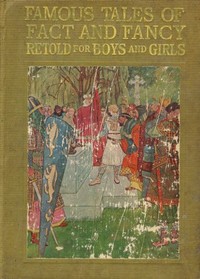
Skinner’s wry asides remind me of my grandfather’s old atlas, margins filled with his pencil notes dismissing this ghost or that witch’s stone as “folly.” I felt that same tender skepticism years later, flipping through Famous Tales of Fact and Fancy Myths and Legends of the Nations of the World Retold for Boys and Girls — Story, Setting & Ideas, where every legend felt like a family story I’d half-forgotten. Strange, how doubt makes a tale feel more human.
-

Douglas Martin - 1 month ago
{'rating': 5, 'text': "Myths And Legends Of Our Own Land is a comprehensive and fascinating dive into American folklore. From the Hudson River legends to tales of the Southwest, this book weaves together stories that shaped our national identity. The narrative style is engaging and brings history to life. Perfect for anyone interested in American culture and mythology, it's a must-have reference and a pleasure to read."} -
Anne Morton - 1 month ago
{'rating': 3, 'text': "This collection offers a wide range of American myths and legends, which is its main strength. However, the organization can be confusing, and the writing is sometimes verbose. It might be more suitable for research than casual reading. Still, it's a valuable resource for those wanting to explore America's folk heritage."} -
Mario Preston - 2 weeks ago
{'rating': 2, 'text': 'While the scope of this anthology is impressive, the execution is lacking. The stories are told in a dry, antiquated style that makes them feel like required reading rather than enjoyable tales. Additionally, some legends are problematic in their portrayal of indigenous peoples. It could benefit from modern annotations and a more inclusive perspective. A disappointing read for those expecting vibrant storytelling.'}
Reader reflection
What did you think of this book?
Answer a few questions and save a private reflection on this device.
Your progress
0
/
10
2
What was your overall reaction to the book?
3
Would you pass this book on to a friend?
4
How much effort did this book require?
5
Did the story or argument move comfortably?
6
Would a second reading be valuable?
7
Did you relate to its people, ideas, or situations?
8
How useful were the ideas in this book?
9
Which lesson or insight stayed with you?
10

Matthew Hill
2 weeks ago