1

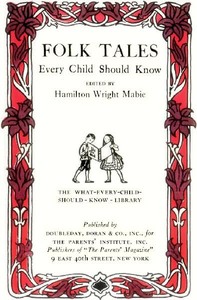
Folk Tales Every Child Should Know — Reading Notes
(4 User reviews)
1269
Project Gutenberg
2005
Not confirmed
Fairy tales
Readers of public-domain and historical texts
Project Gutenberg digital edition
en
Edition facts
Words
48,723
Reading time
212 min
Text sections
5
The catalog record for Folk Tales Every Child Should Know — Reading Notes provides practical reading context through 48,723 words, 3 hr 32 min estimated reading time, and 5 detected text sections.
The text analysis averages about 22.0 words per sentence, while the detected sections provide another way to judge how the source is divided.
Project Gutenberg metadata also associates the work with “Fairy tales,” connecting these edition facts with the source record’s subject description.
Source:
Project Gutenberg record #15164
An editorial note on Hamilton Wright Mabie's 1905 collection of 15 folk tales from Norse, Japanese, African American, Bengali, Slavonic, and other traditions, examining how the tales encode strength in hidden objects, test cunning against brute force, and embed moral lessons in repetitive, formulaic structures.
Editorial Edition Score
4.7/5
★★★★★
★★★★★
Calculated from edition completeness, EPUB availability, text structure and catalogue metadata. Not a user rating.
How this score is calculated
- Description quality20 pts
- Title & short description10 pts
- Source metadata20 pts
- Text length15 pts
- Chapters / structure15 pts
- EPUB file integrity20 pts
Total of 100 points, scaled to a 2.5-5.0 range. Editions with an empty description or a missing EPUB file are not scored.
Edition quality
Read the Text
I. HANS IN LUCK From Grimm's Fairy Tales.
II. WHY THE SEA IS SALT From "Popular Tales from the Norse," by Sir George Webbe Dasent, D.C.L.
III. THE LAD WHO WENT TO THE NORTH WIND From "Popular Tales from the Norse," by Sir George Webbe Dasent, D.C.L.
IV. THE LAD AND THE DEIL From "Popular Tales from the Norse," by Sir George Webbe Dasent, D.C.L.
V. ANANZI AND THE LION From "Popular Tales from the Norse," by Sir George Webbe Dasent, D.C.L.
VI. THE GRATEFUL FOXES From "Tales of Old Japan," by A.B. Mitford.
VII. THE BADGER'S MONEY From "Tales of Old Japan," by A.B. Mitford.
VIII. WHY BROTHER BEAR HAS NO TAIL From "Nights with Uncle Remus," by Joel Chandler Harris.
IX. THE ORIGIN OF RUBIES From "Folk Tales of Bengal," by Rev. Lal Behari Day.
X. LONG, BROAD, AND SHARPSIGHT Translated from the Bohemian by A.H. Wratislaw, M.A., in "Sixty Folk Tales, from Exclusively Slavonic Sources."
XI. INTELLIGENCE AND LUCK Translated from the Bohemian by A.H. Wratislaw, M.A., in "Sixty Folk Tales, from Exclusively Slavonic Sources."
XII. GEORGE WITH THE GOAT Translated from the Bohemian by A.H. Wratislaw, M.A., in "Sixty Folk Tales, from Exclusively Slavonic Sources."
XIII. THE WONDERFUL HAIR Translated from the Serbian by A.H. Wratislaw, M.A., in "Sixty Folk Tales, from Exclusively Slavonic Sources."
XIV. THE DRAGON AND THE PRINCE Translated from the Serbian by A.H. Wratislaw, M.A., in "Sixty Folk Tales, from Exclusively Slavonic Sources."
XV. THE GOOD CHILDREN A Little Russian story of Galicia. Translated by A.H. Wratislaw, M.A., in "Sixty Folk Tales, from Exclusively Slavonic Sources."
XVI. THE DUN HORSE From "Pawnee Hero Stories and Folk Tales," by George Bird Grinnell.
XVII. THE GREEDY YOUNGSTER From the Norwegian tale of Peter Christen Asbjörnsen.
XVIII. HANS, WHO MADE THE PRINCESS LAUGH From the Norwegian tale of Peter Christen Asbjörnsen.
XIX. THE STORY OF TOM TIT TOT An old Suffolk Tale, given in the dialect of East Anglia. From "Tom Tit Tot. An Essay on Savage Philosophy in Folk Tale," by Edward Clodd.
XX. THE PEASANT STORY OF NAPOLEON From "The Country Doctor," by Honoré de Balzac. Translated by Katharine Prescott Wormeley.
When the traveller looks at Rome for the first time he does not realize that there have been several cities on the same piece of ground, and that the churches and palaces and other great buildings he sees to-day rest on an earlier and invisible city buried in dust beneath the foundations of the Rome of the Twentieth Century. In like manner, and because all visible things on the surface of the earth have grown out of older things which have ceased to be, the world of habits, the ideas, customs, fancies, and arts, in which we live is a survival of a younger world which long ago disappeared. When we speak of Friday as an unlucky day, or touch wood after saying that we have had good luck for a long time, or take the trouble to look at the new moon over the right shoulder, or avoid crossing the street while a funeral is passing, we are recalling old superstitions or beliefs, a vanished world in which our remote forefathers lived.
We do not realize how much of this vanished world still survives in our language, our talk, our books, our sculpture and pictures. The plays of Shakespeare are full of reference to the fancies and beliefs of the English people in his time or in the times not long before him. If we could understand all these references as we read, we should find ourselves in a world as different from the England of to-day as England is from Austria, and among a people whose ideas and language we should find it hard to understand.
Hamilton Wright Mabie's Folk Tales Every Child Should Know (1905) gathers fifteen stories from Norse, Japanese, African American, Bengali, and Slavonic sources, among others. The collection's title signals an educational purpose, but the tales themselves resist simple moralizing. Instead, they repeatedly explore a single puzzle: where does true power reside? In the excerpt from “The Dragon and the Prince,” the dragon's strength is hidden not in its body but in a nested series of objects—a lake, a dragon, a boar, a pigeon. This layering of concealment recurs across the volume, inviting readers to track how different cultures encode the same riddle of vulnerability and resilience.
Strength in Disguise
In “The Dragon and the Prince,” the dragon's strength is not in its own body but in a distant lake, inside another dragon, inside a boar, inside a pigeon. The prince must peel away these layers to defeat his enemy. This motif of nested power appears elsewhere in the collection. In “The Lad Who Went to the North Wind,” the lad's gains come from a cloth, a ram, and a stick—each object holding a seemingly impossible power. The tales treat strength as something that can be transferred, hidden, or stolen, never fixed in one place. The dragon's boastful disclosure, “my strength is a long way off,” mirrors the pattern: power is always elsewhere, always contingent. Readers will notice how often a hero wins not by being stronger but by discovering where strength is stored.
Cunning Over Brute Force
The prince in “The Dragon and the Prince” defeats the dragon not through superior strength but by trickery. He wades into the lake and challenges the dragon to single combat, but when the dragon threatens to toss him to the sky, the prince replies, “if I had the emperor's daughter to kiss me on the forehead, I would toss you still higher.” The dragon, curious, lets him go—and the prince gains time. This pattern of outwitting a stronger opponent recurs in “Ananzi and the Lion,” where the spider Ananzi uses flattery and deception to escape the lion's jaws. In “Why Brother Bear Has No Tail,” Brother Rabbit tricks Bear into losing his tail. Across the collection, physical might rarely wins; instead, quick thinking and verbal agility carry the day. The tales reward the clever, not the strong.
Repetition as Structure and Lesson
The tales in this volume rely heavily on repetition. In “The Dragon and the Prince,” the old woman asks the dragon three times where his strength lies, and each time the dragon gives a false answer before revealing the truth. This threefold pattern is a hallmark of oral storytelling, but it also serves a didactic purpose: the listener learns to expect deception and to persist in questioning. Similarly, in “Hans in Luck,” Hans trades his gold for a horse, then a cow, then a pig, then a goose, then a whetstone—each exchange a step toward his final contentment. The repeated structure underscores the tale's irony: what looks like loss is actually gain. Mabie's selection favors stories where repetition builds suspense and reinforces a moral or practical lesson, making the collection a primer on how to read folk tales as patterned narratives.
Mabie's anthology offers a window into how different cultures encode wisdom in nested objects, cunning heroes, and repetitive structures. Readers may find it useful to compare the treatment of power across tales: in the Norse stories, strength is often external and transferable; in the Japanese tales, it is tied to gratitude and reciprocity; in the African American and Bengali stories, it emerges from wit. Attending to these variations reveals the collection's deeper coherence—a shared fascination with the question of where power truly lies.
There is a quiet kinship between Mabie’s folk tales, where cunning always outwits brute strength, and the delicate peril of The Necklace of Princess Fiorimonde, and Other Stories — Context and Discussion. Both whisper that hidden things hold power—a ribbon, a word, a strand of hair. I have shelved them near each other for years, and they seem to nod, knowingly, across the dust. Fiorimonde needs no enchantment to teach what Mabie’s tales already knew.
Jack Hill
1 month agoBenjamin Wright
2 weeks agoDylan Robinson
1 month ago-

Brandi Ruiz - 1 month ago
{'rating': 2, 'text': "While the book contains a good intention of compiling folk tales, the execution falls short. The stories lack the vibrant retellings that modern children are accustomed to, and the language is often stilted and dry. Some tales also perpetuate outdated stereotypes. I would recommend more contemporary collections over this one, as it may fail to keep a child's attention."} -
Michael Fox - 3 weeks ago
{'rating': 5, 'text': "This collection is a treasure trove of classic folk tales that every child should indeed know. The stories are engaging, with timeless moral lessons, and the language is accessible yet rich. My kids were captivated from the first tale, and I found myself enjoying the nostalgia of these beloved narratives. It's a perfect bedtime read that both educates and entertains."} -
Ashley Davis - 2 weeks ago
{'rating': 3, 'text': 'Folk Tales Every Child Should Know offers a solid selection of traditional stories, sure to expose young readers to cultural folklore. However, the writing style feels somewhat dated, and some tales may require parental guidance to explain archaic terms. Still, it serves as a good resource for parents seeking classic stories.'}
Reader reflection
Your personal reading reflection
Build a private reading journal entry for this title.
Your progress
0
/
10
2
Did this book hold your interest?
3
How likely are you to recommend this book?
4
How easy was the book to follow?
5
Is this a title worth rereading?
6
Did the book give you something worth debating?
7
Could you follow the author’s main argument?
8
Which part made the strongest impression?
9
In one sentence, what did you learn?
10







Wyatt Martin
3 weeks ago