1


The Fairy Tales of Charles Perrault — Key Ideas to Explore
(0 User reviews)
82
Project Gutenberg
2009
Not confirmed
Fairy tales
Readers of public-domain and historical texts
Project Gutenberg digital edition
en
Edition facts
Words
31,513
Reading time
138 min
Text sections
5
The Fairy Tales of Charles Perrault — Key Ideas to Explore can be approached with a clearer sense of reading commitment from its source measurements: 31,513 words, 2 hr 18 min estimated reading time, and 5 detected text sections.
The text analysis averages about 27.6 words per sentence, while the detected sections provide another way to judge how the source is divided.
Project Gutenberg metadata also associates the work with “Fairy tales,” connecting these edition facts with the source record’s subject description.
Source:
Project Gutenberg record #29021
This edition of Perrault's fairy tales, translated by Samber and Mansion with Harry Clarke's illustrations, pairs familiar plots with moral verses. The text reveals tensions between ornate narration and blunt morals, and between fairy-granted grace and practical cunning.
Editorial Edition Score
4.7/5
★★★★★
★★★★★
Calculated from edition completeness, EPUB availability, text structure and catalogue metadata. Not a user rating.
How this score is calculated
- Description quality20 pts
- Title & short description10 pts
- Source metadata20 pts
- Text length15 pts
- Chapters / structure15 pts
- EPUB file integrity20 pts
Total of 100 points, scaled to a 2.5-5.0 range. Editions with an empty description or a missing EPUB file are not scored.
Edition quality
Read the Text
s was not his only service to the Academy, for he carried a motion to the effect that future elections should be by ballot; and invented and provided, at his own expense, a ballot-box which, though he does not describe it, was probably the model of those in use in all modern clubs and societies._
_The novelty of his views did not always commend them to his brother 'Immortals.' Those expressed in his poem "Le Siècle de Louis XIV," which he read as an Academician of sixteen years' standing, initiated one of the most famous and lasting literary quarrels of the era. Perrault, in praising the writers of his own age, ventured to disparage some of the great authors of the ancient classics. Boileau lashed himself into a fury of opposition and hurled strident insults against the heretic. Racine, more adroit, pretended to think that the poem was a piece of ingenious irony. Most men of letters hastened to participate in the battle. No doubt Perrault's position was untenable, but he conducted his defence with perfect temper and much wit; and Boileau made himself not a little absurd by his violence and his obvious longing to display the extent of his learning. Perrault's case is finally stated in his four volumes, "Le Parallèle des Anciens et des Modernes," which were published in 1688-1696. He evidently took vastly more pride in this dull and now almost forgotten work than in the matchless stories which have made him famous for ever._
_After twenty years in the service of Colbert, the sun of Perrault's fortunes passed its zenith. His brother, the Commissioner of Taxes, had a dispute with the Minister and was disgraced. Then Perrault got married to a young lady of whom we know nothing except that her marriage was the subject of some opposition from his powerful employer. In a matter of the sort Perrault, though a courtier, could be relied on to consider no wishes save those of his future wife and himself. Colbert's own influence with the King became shaky, and this affected his temper. So Perrault, then just fifty-five, slid quietly from his service in the year 1683._
_Before he went, he succeeded in frustrating a project for closing the Tuileries Gardens against the people of Paris and their children. Colbert proposed to reserve them to the royal use, but Perrault persuaded him to come there one day for a walk, showed him the citizens taking the air and playing with their children; got the gardeners to testify that these privileges were never abused, and carried his point by declaring, finally, that "the King's pleasaunce was so spacious that there was room for all his children to walk there."_
_Sainte-Beuve, seventy years ago, pleaded that this service to the children of Paris should be commemorated by a statue of Perrault in the centre of the Tuileries. The statue has never been erected; and, to the present day, Paris, so plentifully provided with statues and pictures of the great men of France, has neither the one nor the other to show that she appreciates the genius of Perrault. Indeed, there is no statue of him in existence; and the only painting of him with which I am acquainted is a doubtful one hung far away in an obscure corner of the palace of Versailles._
_The close of Perrault's official career marked the beginning of his period of greatest literary activity. In 1686 he published his long narrative poem "Saint Paulin Evesque de Nole" with "a Christian Epistle upon Penitence" and "an Ode to the Newly-converted," which he dedicated to Bossuet. Between the years 1688 and 1696 appeared the "Parallèle des Anciens et des Modernes" to which I have already referred. In 1693 he brought out his "Cabinet des Beaux Arts," beautifully illustrated by engravings, and containing a poem on painting which even Boileau condescended to admire. In 1694 he published his "Apologie des Femmes." He wrote two comedies--"L'Oublieux" in 1691, and "Les Fontanges." These were not printed till 1868. They added nothing to his reputation. Between 1691 and 1697 were composed the immortal "Histoires ou Contes du Temps Passé" and the "Contes en Vers." Toward the end of his life he busied himself with the "Éloges des Hommes Illustres du Siècle de Louis XIV." The first of these two stately volumes came out in 1696 and the second in 1700. They were illustrated by a hundred and two excellent engravings, including one, by Edelinck, of Perrault himself and another of his brother Claude. These biographies are written with kindly justice, and form a valuable contribution to the history of the reign of the Roi Soleil. I have not exhausted the list of Perrault's writings, but, to speak frankly, the rest are not worth mentioning._
This edition of Charles Perrault's fairy tales, first published in English in 1922, pairs the familiar plots with the ornate, darkly romantic illustrations of Harry Clarke. The translations by Robert Samber and J. E. Mansion preserve a formal, slightly archaic voice that contrasts sharply with the blunt moral verses appended to each tale. Readers encounter not only the well-known stories of Cinderilla, Blue Beard, and Little Red Riding-Hood, but also less frequently reprinted tales such as "The Ridiculous Wishes" and "Donkey-Skin." The volume's introduction by Thomas Bodkin and Clarke's full-page plates frame the collection as both a literary artifact and a visual experience, inviting attention to the interplay between text and image.
Moral Verses as a Second Voice
Each tale in this collection concludes with one or more moral verses written in rhyming couplets, creating a distinct shift in register from the prose narrative. In "Cinderilla," the first moral praises grace as "the fairies' gift of greatest worth," while a second moral warns against disobedience to parents. These verses often simplify or redirect the story's implications, sometimes contradicting the events just described. For instance, after Cinderilla forgives her sisters, the moral emphasizes grace over fine dress, yet the tale itself rewards her patience with a prince. The verses function as a separate, didactic layer, inviting readers to compare the story's logic with the moral's lesson.
The Role of Fairy Gifts and Human Agency
Perrault's fairies bestow gifts that are conditional or limited. In "Riquet with the Tuft," a fairy grants the ugly prince the power to bestow wit on the person he loves most, but the princess must choose to love him for the gift to activate. Similarly, Cinderilla's godmother transforms her clothes but cannot change her sisters' behavior; the prince's messenger must still try the slipper on every woman. These details suggest that fairy magic enables but does not guarantee happy endings. The tales repeatedly show characters succeeding through a combination of supernatural aid and their own actions—Puss in Boots uses trickery, Little Thumb uses cleverness—hinting that Perrault's world rewards resourcefulness as much as virtue.
Patterns of Cruelty and Restraint
The excerpts reveal a pattern of threatened or implied violence that is often softened by the narration. Blue Beard's wife is saved at the last moment; the Queen in "The Sleeping Beauty" demands to eat her granddaughter "with Sauce Robert," but the steward substitutes animals. Perrault describes these horrors with a matter-of-fact tone that distances the reader from the brutality. In "Little Red Riding-Hood," the wolf eats the grandmother and the girl without any rescue, a notably grim ending. This variation in outcome—some tales offer last-minute salvation, others do not—creates an uneven moral landscape. The illustrations by Harry Clarke, with their sinuous lines and shadowy figures, amplify this undercurrent of menace, making the collection feel darker than the prose alone might suggest.
Readers approaching this edition should attend to the interplay between the translated prose, the moral verses, and Clarke's illustrations. The tales reward comparison: notice how similar motifs—magical gifts, tests of obedience, transformations—recur with different resolutions. The volume's historical context as a 1922 English publication also invites consideration of how Perrault's stories were adapted for a new audience. Treat the morals not as definitive interpretations but as one voice in a conversation that includes the narrative, the images, and the reader's own response.
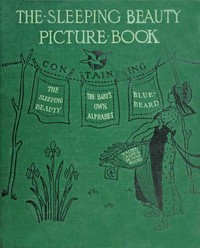
I keep returning to the moment in Perrault where the fairy’s grace arrives, and yet everyone still has to scheme. It reminds me of sitting with The Sleeping Beauty Picture Book — Edition Insights, where the illustrations soften the same harsh bargain. We want the magic to be enough, but the moral verses whisper otherwise. Each page feels like overheard advice I’m not ready to follow.
There are no reviews for this eBook.
There are no comments for this eBook.
Reader reflection
Take a moment to reflect on this book
Create a short personal record of your experience with this book.
Your progress
0
/
10
2
How did the book work for you overall?
3
Is this a title you would suggest to others?
4
How demanding did the text feel?
5
Would you like to discuss this book with someone?
6
Could you follow the author’s main argument?
7
Which element worked best for you?
8
Was the book what you thought it would be?
9
In one sentence, what did you learn?
10