1

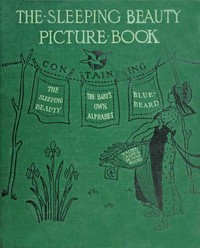
The Sleeping Beauty Picture Book — Edition Insights
(1 User reviews)
354
Project Gutenberg
2007
Not confirmed
Fairy tales; Nursery rhymes
Readers of public-domain and historical texts
Project Gutenberg digital edition
en
Edition facts
Words
5,014
Reading time
22 min
Text sections
1
The catalog record for The Sleeping Beauty Picture Book — Edition Insights provides practical reading context through 5,014 words, 22 min estimated reading time, and 1 detected text section.
The text analysis averages about 22.5 words per sentence, while the detected sections provide another way to judge how the source is divided.
Project Gutenberg metadata also associates the work with “Fairy tales,” connecting these edition facts with the source record’s subject description.
Source:
Project Gutenberg record #23521
Walter Crane's illustrated edition combines the Sleeping Beauty fairy tale with Bluebeard and an alphabet, using rhythmic verse and recurring motifs of spindles, thorns, and enchanted sleep.
Editorial Edition Score
4.4/5
★★★★★
★★★★★
Calculated from edition completeness, EPUB availability, text structure and catalogue metadata. Not a user rating.
How this score is calculated
- Description quality20 pts
- Title & short description10 pts
- Source metadata20 pts
- Text length15 pts
- Chapters / structure15 pts
- EPUB file integrity20 pts
Total of 100 points, scaled to a 2.5-5.0 range. Editions with an empty description or a missing EPUB file are not scored.
Edition quality
Read the Text
Angry was she, because her place and dish had been forgot, And angry things she muttered long, and kept her anger hot.
Until the Fairy godmothers their gifts and wishes gave: She waited long to spoil the gifts, and her revenge to have. One gave the Princess goodness, and one gave her beauty rare; One gave her sweetest singing voice; one, gracious mien and air; One, skill in dancing; one, all cleverness; and then the crone Came forth, and muttered, angry still, and good gift gave she none;
But said, that in the future years the Princess young should die, By pricking of a spindle-point--ah, woeful prophecy! But now, a kind young Fairy, who had waited to the last, Stepped forth, and said, "No, she shall sleep till a hundred years are past; And then she shall be wakened by a King's son--truth I tell-- And he will take her for his wife, and all will yet be well."
In vain in all her father's Court the spinning-wheel's forbid In vain in all the country-side the spindles sharp are hid; For in a lonely turret high, and up a winding stair, There lives an ancient woman who still turns her wheel with care. The Princess found her out one day, and tried to learn to spin; Alas! the spindle pricked her hand--the charm had entered in!
And down she falls in death-like sleep: they lay her on her bed, And all around her sink to rest--a palace of the dead! A hundred years pass--still they sleep, and all around the place A wood of thorns has risen up--no path a man can trace. At last, a King's son, in the hunt, asked how long it had stood, And what old towers were those he saw above the ancient wood.
An aged peasant told of an enchanted palace, where A sleeping King and Court lay hid, and sleeping Princess fair. Through the thick wood, that gave him way, and past the thorns that drew Their sharpest points another way, the King's son presses through. He reached the guard, the court, the hall,--and there, where'er he stept, He saw the sentinels, and grooms, and courtiers as they slept.
Ladies in act to smile, and pages in attendance wait; The horses slept within their stalls, the dogs about the gate. The King's son presses on, into an inner chamber fair, And sees, laid on a silken bed, a lovely lady there; So sweet a face, so fair--was never beauty such as this; He stands--he stoops to gaze--he kneels--he wakes her with a kiss.
He leads her forth: the magic sleep of all the Court is o'er,-- They wake, they move, they talk, they laugh, just as they did of yore A hundred years ago. The King and Queen awake, and tell How all has happed, rejoicing much that all has ended well. They hold the wedding that same day, with mirth and feasting good-- The wedding of the Prince and Sleeping Beauty in the Wood.
As I was going up Pippin Hill Pippin hill was dirty. There I met a pretty miss, And she dropped me a curtsy.
Boys and girls come out to play. The moon doth shine as bright as day: Come with a whoop, come with a call, Come with a good will, or not at all.
Cuckoo, cherry tree Come down & tell me How many years I have to live!
Ding, dong, bell, Pussy's in the well. Who put her in? Naughty Johnny Green. Who pulled her out? Little Tommy Trout.
Early to bed, and early to rise, Is the way to be healthy, wealthy, and wise.
For every evil under the sun There is a remedy, or there is none. If there be one, try and find it; If there be none, never mind it.
Great A, little A; Bouncing B; The cat's in the cupboard. And she can't see me.
Hark! hark! the dogs do bark, The Beggars are coming to town. Some in rags & some in jag's And some in velvet gowns.
I had a little pony They called it Dapple Gray, I lent it to a lady To ride a mile away. She whipped it, she slashed it, She drove it through the mire. I will not lend my pony more, For all the ladies' hire.
John Smith, fellow fine, Can you shoe this horse o' mine? Yes, indeed, and that I can As well as any man! There's a nail upon the tae, &c To make the powny speel the brae; There's a nail and there's a brod --a horse weel shod.
King o' Katchem met a king In a narrow lane; Says this king to that king "Where have you been?"
Walter Crane's The Sleeping Beauty Picture Book opens with a fairy tale told in rhyming couplets, where the King and Queen's longing for a child is answered by a daughter, and the christening feast sets off a chain of curses and gifts. The verse moves briskly through the prophecy of the spindle prick and the hundred-year sleep, then shifts to the thorny wood that grows around the palace. Crane's illustrations, though not reproduced in this text-only edition, are referenced in the original page images available online.
Rhyme and Repetition in the Verse
The narrative is built on a steady rhythm of couplets, with lines like “Long, long ago, in ancient times, there lived a King and Queen” establishing a formal, almost ballad-like tone. The verse often repeats key phrases: the Fairies seven are named twice, and the spindle-point recurs as a threat. This repetition mirrors the fairy-tale structure of threes and sevens, reinforcing the sense of an inevitable pattern. The old Fairy's anger is described as “hot” and “muttered long,” emphasizing her persistence. The verse does not linger on description but moves quickly from event to event, compressing the story into a tight sequence of cause and effect.
The Spindle and the Thorny Wood as Recurring Images
Two images dominate the excerpt: the spindle and the thorny wood. The spindle is first mentioned in the prophecy—“pricking of a spindle-point”—and later appears when the Princess finds the old woman spinning in a “lonely turret high.” The act of spinning becomes a fatal curiosity. After the Princess pricks her hand, the palace falls into a “death-like sleep,” and a “wood of thorns” rises up, making the place impenetrable. The thorns are not just a barrier but a visual symbol of the passage of time: they grow over a hundred years, hiding the towers. The text notes that the wood “gave him wa” (cut off), suggesting the prince's encounter with the thorns is a physical trial.
Movement Between Scenes and the Role of Time
The story jumps quickly from the christening to the ban on spindles, then to the Princess's discovery of the turret, the prick, the sleep, and the hundred-year wait. There is no gradual development; each scene is a discrete block of verse. The passage of time is marked by the growth of the wood and the peasant's memory: “An aged peasant told of an enchanted palace.” The prince arrives “in the hunt,” a casual intrusion into a legendary space. The structure emphasizes the gap between the curse and its resolution, with the sleep acting as a pause in the narrative. The verse does not describe the interior of the palace during the sleep, leaving it as a static tableau.
The Book's Composite Format: Three Works in One
The title page reveals that this picture book contains not only The Sleeping Beauty but also Bluebeard and The Baby's Own Alphabet. The excerpt only includes the first tale, so the other two are not represented here. However, the inclusion of an alphabet suggests a didactic purpose alongside the fairy tales. Crane's illustrations, described as “original coloured designs,” likely unify the volume visually. The text of The Sleeping Beauty ends abruptly in the excerpt, just as the prince begins to push through the wood. Readers of this edition will need to consult the original page images to see how the story concludes and how the other sections are presented.
This edition preserves the text of Crane's picture book without the illustrations, so readers should seek the original page images to appreciate the visual design. The verse form and the rapid scene changes make the story move quickly, but the recurring images of spindles and thorns anchor the narrative. The inclusion of Bluebeard and an alphabet suggests a varied collection aimed at young readers, though only the first tale is excerpted here.
That rainy afternoon, Crane’s spindles and thorns seemed to hum a slower rhythm, until I drifted from his enchanted sleep to another world’s gentler awakenings—Deccan Nursery Tales; or, Fairy Tales from the South — Context and Discussion, where sleep and waking feel less like curses and more like the tide. I simply turned the page and stayed there.
There are no comments for this eBook.
Reader reflection
Record your reading impressions
A brief reflection can help important ideas stay with you longer.
Your progress
0
/
10
2
How did the book work for you overall?
3
Would you encourage someone else to read it?
4
How easy was the book to follow?
5
Do you expect to return to this book?
6
What did you appreciate most?
7
How strongly did the book affect you emotionally?
8
Would you start a conversation about this book?
9
What is the main idea you are taking away?
10

Sebastian Mitchell
1 month ago