1

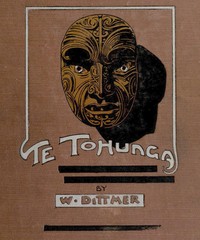
Te Tohunga: The ancient legends and traditions of the Maoris — Inside the Classic
(6 User reviews)
1561
Project Gutenberg
2017
Not confirmed
Mythology, Maori; Māori (New Zealand people) -- Folklore; Folklore -- New Zealand
Readers of public-domain and historical texts
Project Gutenberg digital edition
en
Edition facts
Words
33,097
Reading time
144 min
Text sections
5
For Te Tohunga: The ancient legends and traditions of the Maoris — Inside the Classic, the stored edition analysis reports 33,097 words, 2 hr 24 min estimated reading time, and 5 detected text sections.
The text analysis averages about 25.3 words per sentence, while the detected sections provide another way to judge how the source is divided.
Project Gutenberg metadata also associates the work with “Mythology, Maori,” connecting these edition facts with the source record’s subject description.
Source:
Project Gutenberg record #54610
An editorial note on W. Dittmer's 'Te Tohunga', focusing on the oral storytelling voice, rhythmic shifts in battle narration, and the interplay between mythic catalog and dramatic scene.
Editorial Edition Score
4.7/5
★★★★★
★★★★★
Calculated from edition completeness, EPUB availability, text structure and catalogue metadata. Not a user rating.
How this score is calculated
- Description quality20 pts
- Title & short description10 pts
- Source metadata20 pts
- Text length15 pts
- Chapters / structure15 pts
- EPUB file integrity20 pts
Total of 100 points, scaled to a 2.5-5.0 range. Editions with an empty description or a missing EPUB file are not scored.
Edition quality
Read the Text
Who was a true friend to Artists and their Art in New Zealand
This Book is Dedicated By the Author
INTRODUCTION. With 2 Illustrations 1
I. TIKI--THE ANCESTOR OF MANKIND. With 3 Illustrations 5
II. THE CREATION OF HAWAIKI. With 3 Illustrations 9
III. THE POI-DANCE. With 3 Illustrations 15
IV. THE CREATION OF THE STARS. With 5 Illustrations 20
V. THE CHANT OF RANGI-NUI. With 2 Illustrations 26
VI. TANE--THE CREATION OF NATURE. With 2 Illustrations 30
VII. THE FIGHT OF NIGHT AND DAY. With 2 Illustrations 34
VIII. MAUI--THE CREATION OF NEW ZEALAND. With 6 Illustrations 37
IX. MAHUIKA. With 2 Illustrations 52
X. MAUI AND MAHUIKA; MAUI’S FIGHT WITH THE SUN. With 3 Illustrations 56
XI. THE DEATH OF MAUI. With 2 Illustrations 62
XII. TE AROHA O HINEMOA: a Legend. With 2 Illustrations 66
XIII. MAUI AND IRAWARU: a Tradition. With 1 Illustration 71
XIV. NGA PATU-PAIAREHE, THE CHILDREN OF THE MIST [by James Cowan]. With 3 Illustrations 74
XV. TIHI-O-TE-RANGI. With 3 Illustrations 80
XVI. THE BATTLE OF THE GIANTS. With 3 Illustrations 86
XVII. THE COMING OF THE MAORI [by James Cowan]. With 3 Illustrations 93
XVIII. TRADITION--TAMA-TE-KAPUA. With 4 Illustrations 100
XIX. A TANGI. TE REINGA [by James Cowan]. With 3 Illustrations 107
XX. NGAWAI. THE BURIAL OF TE HEU-HEU ON TONGARIRO. With 4 Illustrations 114
LIST OF FULL-PAGE ILLUSTRATIONS
1. HUPENE, THE OLD TOHUNGA _Frontispiece_
2. MATAPO, A BLIND TOHUNGA 9
3. TANE, THE GOD OF TREES 11
4. THE BIRTH OF MAUI AT MAHIKU-RANGI 17
5. TANE SEARCHING FOR THE DWELLING OF THE EVENING STAR AND THE MORNING STAR 21
6. NGAWAI, A MAORI CHIEFTAINESS 27
7. TANE AND THE TREES 31
8. MAUI ENTERS HINE-NUI-TE-PO’S PATAKA 35
11. MAUI CHANTING INCANTATIONS 45
12. MAUI FISHING NEW ZEALAND OUT OF THE OCEAN 49
13. TARANGA, THE NIGHT-SUN, AND MAUI 53
14. MAUI’S FIGHT WITH THE SUN 57
15. HINE-NUI-TE-PO KILLING MAUI 63
17. MAUI AND IRAWARU 71
18. THE MAORIS AND THE FAIRY PEOPLE 77
24. THE FIRST OFFERING TO THE GODS 101
25. THE BREAKING OPEN OF THE GATES OF HEAVEN 105
The pronunciation of the vowels in Maori are:
a has the sound of a in rather. e ” ” e in dedication. i ” ” ee in sheep. o ” ” o in bold. u ” ” oo in cook.
Ariki: a high chief, a leader, a master, lord.
Aroha: affection, love.
Atua: a supernatural being, a god.
Atua-toko: a small carved stick, the symbol of the god whom it represents. It was stuck in the ground whilst holding incantations to its presiding god.
Haere-mai: come here, welcome.
Haere-ra: good-bye, go, farewell.
Haere-mai-ra, me o tatou mate: come here, that I may sorrow with you.
Karakia: invocation, ceremony, prayer.
Kehua: spirit, ghost.
Kia-ora: welcome, good luck. A greeting.
Kura: red. The sacred colour of the Maori.
Mana: power, authority, prestige, influence, sanctity, luck.
Mere-pounamu: a native weapon made of a rare green stone.
Mua: an old-time Polynesian god.
Piu-piu: short mat made out of flax leaves and neatly decorated.
Po: gloom, darkness, the lower world.
Rangatira: chief, warrior, gentlemen.
Reinga: the spirit land, the home of the dead.
Taiaha: a weapon made of wood.
Tangi: funeral, dirge. Assembly to cry over the dead.
Taniwha: sea monster, water spirit.
Tapu: sacred, supernatural possession of power. Under restriction.
Tiki: first man created, a figure carved of wood, or other representation of man.
Tohunga: a priest, a possessor of supernatural powers.
Tohu-mate: omen of death.
Wairua: spirit, soul.
Whare: hut made of fern stems tied together with flax and vines, and roofed in with raupo (reeds).
Whare-puni: large, and often beautifully carved and decorated house. A meeting house.
Whare-kura: the ancient sacred building of the Maoris at Hawaiki. Those who once met there in council are now regarded as their highest gods. Whare-kura is the name of the sacred history of the Maoris.
Whaka-papa: the genealogical history of the Maori, or a tribe, or a family.
With the drawings it began.
An expired world tried to come to life again in the fragments which some old Maori narrated. Nature all around favoured admiration only, and her loneliness was alive with longing.
Of Maori art I had never heard, and, when that art was first offered to me, I had none other to choose. At first it disgusted me. But I had to make use of my time. The evergreen nature was beautiful, and entrancing was her invitation to waste my life in her midst, as she herself was wasting hers.
To protect myself against her allurements, I began the first sketches of old carvings. Then I made more.
Sitting beside me, and looking at my work, an old Maori related the deeds of his ancestor, upon whose carved image I was at work.
And they were mighty deeds!
In the evenings later, at the camp-fire, those deeds lived again in my thoughts, and the imagination busied herself, awkwardly enough, to express new ideas with the help of new forms.
That was the beginning of the first drawing.
Out of books I could learn the old legends, but from the fragmentary narratives of my old friends they sprang into life: so the number of drawings grew--aimless, purposeless.
W. Dittmer's Te Tohunga presents Maori legends through a distinctive narrative voice that mimics oral recitation. The text frequently shifts between declarative catalog—listing events and genealogies—and vivid, exclamatory passages that dramatize key moments. This oscillation creates a rhythm that mirrors the performance of a tohunga (priest) addressing an audience, with phrases like 'Ha, let the eyes of your mind perceive' directly invoking a listener.
Oral Cadence and Direct Address
The narrative voice in Te Tohunga is marked by repeated interjections and commands to the listener. In the account of Maui’s fight with the Sun, the text erupts into a series of exclamations: 'Ha, Maui springs forward with his sacred weapon—Te Ra cries!—Ah, Maui beats him; look, he bleeds!—ha, again he beats the Sun; again—again—Te Ra cries wildly!—ah, ah—Maui has broken his wing.' This passage, with its breathless punctuation and repeated 'ha' and 'ah', simulates the excitement of a live telling. The narrator also directly addresses 'my listener' and 'my friend', reinforcing the sense of an oral performance. Such techniques appear throughout, contrasting with more measured expository sections that introduce characters or explain cosmology.
Pace Shifts Between Catalog and Drama
The book alternates between two distinct paces: a steady, enumerative style for genealogies and creation sequences, and a rapid, staccato style for heroic confrontations. For instance, the chapter 'The Creation of the Stars' likely proceeds in a methodical list, while the battle with the Sun accelerates into a series of short, clipped sentences. This shift is not merely stylistic but structural: the slower passages build context, while the faster ones deliver emotional climax. The effect is that the reader experiences the legend as both a repository of knowledge and a living story. The change in pace is especially pronounced in the Maui cycle, where the hero’s boastful speeches—'Who caught the big fish, Te ika-a-Maui? Who?—Maui!'—further quicken the tempo before a dramatic encounter.
Repetition and Ritual Language
Repetition functions as a key device in Te Tohunga, echoing the formulaic nature of oral tradition. The phrase 'ake, ake, ake' (forever and ever) recurs in Maui’s speeches, lending a incantatory quality. Similarly, the naming of characters often includes epithets: 'Tama-nui-ki-te-Ra' is introduced as 'the Great Son of the Heaven', and Hine-nui-te-po is described with a fixed set of attributes—'her eyes are dark as greenstone; her teeth are sharp as obsidian'. These repeated descriptors anchor the narrative in a ritual register, distinguishing it from everyday speech. The text also uses parallel structures, such as 'finer and finer became the life at Hawaiki; and finer and finer became the life at Aotea-roa', which create a rhythmic, almost hypnotic effect. This repetition reinforces the oral origin of the material, even as it is rendered in written English.
Readers attentive to voice will notice how Dittmer’s English prose retains traces of Maori oratory: the use of 'Ha' as an exclamation, the direct address to an audience, and the rhythmic repetition of key phrases. These features distinguish Te Tohunga from a conventional myth collection, making it a document of cross-cultural transcription as much as a record of legend. The shifts in pace—from measured catalog to urgent drama—invite the reader to imagine the tohunga’s performance, with its changes in tone and tempo.
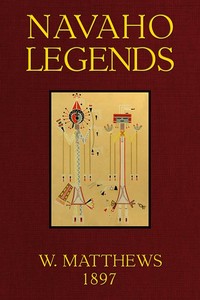
I have held W. Dittmer’s account of Māori battle-chants close for decades, feeling that old rhythm pulse between catalog and cry. It reminded me, oddly, of the hushed cadence I found later in a certain Southwestern collection. Both speak of worlds held together by voice, not ink. There is a quiet kinship there. Navaho Legends — Edition Insights rests beside it now, two patient storytellers on my shelf.
Grace Lewis
2 weeks agoGrace Moore
4 weeks agoElla Hernandez
2 weeks agoAvery Scott
2 weeks agoThere are no comments for this eBook.
Reader reflection
How will you remember this book?
Save your reaction, strongest insight, and memorable passage.
Your progress
0
/
10
2
Was reading this book enjoyable?
3
Would you pass this book on to a friend?
4
Did the language feel accessible?
5
Did the book offer a fresh perspective?
6
How well did it match your expectations?
7
Did the book give you something worth debating?
8
How would you describe its reading pace?
9
What changed or sharpened your thinking?
10
Michael Torres
2 weeks ago