1

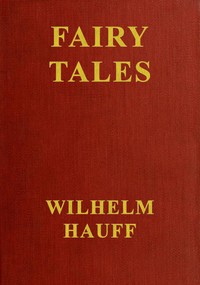
Fairy tales — Reading Companion
(1 User reviews)
312
Project Gutenberg
2024
Not confirmed
Fairy tales -- Germany -- Translations into English
Readers of public-domain and historical texts
Project Gutenberg digital edition
en
Edition facts
Words
82,214
Reading time
358 min
Text sections
18
The source record for Fairy tales — Reading Companion measures this digital text at 82,214 words, 5 hr 58 min estimated reading time, and 18 detected text sections.
The text analysis averages about 24.3 words per sentence, while the detected sections provide another way to judge how the source is divided.
Project Gutenberg metadata also associates the work with “Fairy tales -- Germany -- Translations into English,” connecting these edition facts with the source record’s subject description.
Source:
Project Gutenberg record #74947
Wilhelm Hauff's fairy tales blend Oriental opulence with German folklore, featuring caliphs, dwarfs, and talking animals. The collection showcases sharp contrasts between power and vulnerability, magic and mundane cruelty, as seen in tales like 'Caliph Stork' and 'The Cold Heart.'
Editorial Edition Score
4.9/5
★★★★★
★★★★★
Calculated from edition completeness, EPUB availability, text structure and catalogue metadata. Not a user rating.
How this score is calculated
- Description quality20 pts
- Title & short description10 pts
- Source metadata20 pts
- Text length15 pts
- Chapters / structure15 pts
- EPUB file integrity20 pts
Total of 100 points, scaled to a 2.5-5.0 range. Editions with an empty description or a missing EPUB file are not scored.
Edition quality
Read the Text
Caliph of Bagdad, was taking his ease one beautiful afternoon, stretched out upon his couch. He had just awakened from a little nap and was in a pleasant mood. From time to time he drank from the cup of coffee one of his slaves handed to him, and took long whiffs from a rosewood pipe, stroking his long beard the while, with an air of extreme complacency. In short, it was evident that the Caliph was in a very good humour.
It was the best time in the day for any one to approach him on business, for he was usually inclined to grant any request one might ask, and for this reason, his grand vizier Mansor was wont to visit him at that hour. On this particular afternoon he came as usual, but seemed unaccountably quiet and thoughtful. The Caliph removed his pipe from his mouth and said: “Why do you look so serious, Grand Vizier?”
The grand vizier crossed his arms on his breast, bowed low before his master, and answered:
“Sire, it is no wonder I look disturbed, for below the palace wall stands a pedlar, who has such beautiful goods for sale that it angers me to think I have no money to spare just now.”
The Caliph, who had long wished for an opportunity to confer some gift upon his vizier, sent a black slave to fetch the pedlar.
Very soon the slave returned, ushering the pedlar into his master’s presence. He was a fat little man, with a sunburnt face and dressed in rags. He carried a pack in which all sorts of wares were huddled together, pearls, rings, richly-chased pistols, goblets and combs.
The Caliph and his vizier took stock of everything, and finally the Caliph purchased handsome pistols for himself and his vizier Mansor, and a beautiful comb for Mansor’s wife.
As the pedlar was about to close his pack, the Caliph noticed a little drawer and asked if there was anything in it for sale.
The man opened the drawer and took out a snuff-box containing a dark coloured powder, and a paper covered with very curious characters, which neither the Caliph nor his vizier were able to read. “I had these from a merchant, who picked them up in the streets of Mecca,” said the pedlar. “I do not know what they contain and they are at your service for a very low price, as I do not know what to do with them.”
The Caliph, who was always glad to purchase rare manuscripts for his library, even if he could not read them himself, bought both snuff-box and paper, and dismissed the pedlar.
But the Caliph was curious to know what the writing on the paper meant and asked the vizier if he knew of any one who would possibly be able to decipher it.
“Most gracious lord and master,” said the vizier, “near the great Mosque dwells a man known as Selim the Learned, who understands all languages; bid him come hither and maybe he will understand these mysterious characters.”
The learned Selim was soon sent for and the Caliph addressed him thus: “Selim, it is said of you that you are a very learned man; look well at this writing, and see if you can read it. If you are able to do so, I will give you a new robe for feast days, but if you are unable to do so you will receive twelve strokes upon the back and five-and-twenty upon the soles of your feet, because you have masqueraded under the name of Selim the Learned.”
Selim glanced at the writing intently and suddenly cried out: “It is Latin, my Lord, most certainly it is Latin.”
“Very well, then,” commanded the Caliph impatiently, “if you know that it is Latin, tell me what it means.”
Selim began to translate: “Man, whoever you be, who shall find this, praise Allah for his mercy. He who shall take a pinch of the powder in this snuff-box and say the word ‘Mutabor’ shall be able to transform himself into any kind of animal and understand the creature’s language. When he wishes to return to his original form he must bow three times towards the East and repeat the same word. But let him beware, when in the transformed state, never to laugh, otherwise he will forget the magic word and will be condemned to remain an animal.”
When Selim had finished reading, the Caliph was beside himself with joy. He made Selim take an oath that he would not reveal the secret, gave him a handsome robe, and sent him away.
Wilhelm Hauff's Fairy Tales, translated by L. L. Weedon and illustrated by Arthur A. Dixon, opens with a caliph lounging on a couch, sipping coffee and stroking his beard—a scene of serene authority that quickly unravels. The collection juxtaposes such moments of complacency with sudden transformations: the Caliph of Bagdad is turned into a stork, and a dwarf's nose grows monstrously. These shifts are not merely magical; they expose the fragility of status and the arbitrariness of power. Hauff's narratives often hinge on a single, seemingly trivial transaction—a florin withheld, a pedlar's goods—that spirals into consequence. The tales are rooted in specific cultural landscapes, from Bagdad's palace walls to a Scottish cavern, yet share a preoccupation with the tension between outward appearance and inner worth.
Power and Its Discontents
The opening of 'The Story of Caliph Stork' establishes a ruler at leisure, yet the vizier's quiet disturbance hints at unease. The caliph's good humour is conditional, a mood that grants or withholds favours. This dynamic recurs: in 'The Story of the Florin,' a count's refusal to give a florin to an old woman triggers a curse that devalues his inheritance. Hauff repeatedly shows authority figures—caliphs, counts, merchants—whose control is undermined by a single misstep. The old woman's scornful retort, 'so I'm not worth a florin?' echoes through the collection, questioning how worth is measured. Even the dwarf Long-Nose, once a skilled craftsman, is reduced to a spectacle. These tales suggest that power is a precarious performance, easily disrupted by the very people it dismisses.
The Currency of Compassion
Hauff's stories frequently pivot on acts of giving or withholding. In 'The Story of the Florin,' the count throws coppers at the old woman, who catches them with uncanny precision and returns them into his purse. The florin—a coin of modest value—becomes a symbol of human worth. The count's refusal to part with it marks him as petty, and the old woman's parting threat, 'Zollern, Zollern, you still owe me the florin,' lingers across generations. Similarly, the pedlar in 'Caliph Stork' offers goods that tempt the vizier, but the transaction is never straightforward. Hauff's world is one where generosity and stinginess have tangible, often magical, consequences. The old woman who heals both man and beast with her ointments is dismissed as a witch, yet her knowledge is vital. Compassion, in these tales, is a currency that buys more than gold.
Transformation as Revelation
Physical transformation in Hauff's tales is rarely a punishment alone; it is a revelation of character. The caliph becomes a stork, the dwarf grows a long nose, and a false prince is exposed. These changes strip away social masks. The caliph, once complacent, must navigate the world as a bird; the dwarf, once proud of his appearance, becomes a grotesque curiosity. Yet transformation also offers insight: the dwarf learns to value skill over looks, and the stork-caliph gains humility. Hauff's transformations are not permanent—they can be reversed through trial—but they leave a mark. The count's son, Cuno, is shaped by his father's harshness and the old woman's kindness; his character is forged in the crucible of neglect. The tales suggest that identity is not fixed but revealed through crisis, and that the most profound changes are those that alter how one sees oneself.
Readers approaching Hauff's collection should attend to the recurring motifs of exchange and judgment. The tales reward attention to small details—a coin, a word, a gesture—that carry disproportionate weight. The illustrations by Arthur A. Dixon, with their vivid colour plates and black-and-white scenes, offer a visual counterpoint to the text's moral ambiguities. This edition, translated by L. L. Weedon, preserves the rhythmic cadence of Hauff's prose, making it suitable for both solitary reading and shared storytelling.
That grey afternoon, I kept returning to Fairy Tales — Reading Companion, especially the way Hauff’s stork-king loses his voice yet keeps his dignity. Rain tapped the window. Somewhere between the caliph’s curse and the cold-hearted Peter, I remembered an old Russian collection where a similar stillness hovers—woodcutters bargaining with the uncanny, magic wearing thin as linen. I pulled down The Russian Garland, Being Russian Folk Tales — Story, Setting & Ideas, and the afternoon folded into another haunted geography.
There are no comments for this eBook.
Reader reflection
How did this book work for you?
Your answers remain private and are stored only in this browser.
Your progress
0
/
10
2
How much did you enjoy the reading experience?
3
Would you pass this book on to a friend?
4
How easy was the book to follow?
5
How valuable was this book for your own interests?
6
Was the book what you thought it would be?
7
How strong was your personal connection to the text?
8
What was the strongest part of the book?
9
Which lesson or insight stayed with you?
10
Lucas Jones
3 weeks ago