1

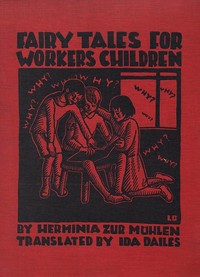
Fairy Tales for Workers' Children — A Closer Reading
(1 User reviews)
344
Project Gutenberg
2021
Not confirmed
Fairy tales -- Germany; Communism -- Juvenile fiction
Readers of public-domain and historical texts
Project Gutenberg digital edition
en
Edition facts
Words
18,906
Reading time
83 min
Text sections
6
The catalog record for Fairy Tales for Workers' Children — A Closer Reading provides practical reading context through 18,906 words, 1 hr 23 min estimated reading time, and 6 detected text sections.
The text analysis averages about 15.8 words per sentence, while the detected sections provide another way to judge how the source is divided.
Project Gutenberg metadata also associates the work with “Fairy tales -- Germany,” connecting these edition facts with the source record’s subject description.
Source:
Project Gutenberg record #66687
Hermynia Zur Mühlen's 1925 fairy tales use talking plants, animals, and a questioning child to critique class inequality and slavery, with a translator's foreword framing them as tools for worker solidarity.
Editorial Edition Score
4.6/5
★★★★★
★★★★★
Calculated from edition completeness, EPUB availability, text structure and catalogue metadata. Not a user rating.
How this score is calculated
- Description quality20 pts
- Title & short description10 pts
- Source metadata20 pts
- Text length15 pts
- Chapters / structure15 pts
- EPUB file integrity20 pts
Total of 100 points, scaled to a 2.5-5.0 range. Editions with an empty description or a missing EPUB file are not scored.
Edition quality
Read the Text
ght how in past hard winters many wretched Sparrows had died of hunger and cold.
“No, no,” said he to himself. “I must not be so cowardly. This matter does not concern only myself, but all my brother Sparrows, all the Sparrows of future generations, who will live when I have been long dead. It will be worth every danger and every sacrifice if I can help them to a happier life.”
And the brave young Sparrow decided to leave the next day.
He spent that night in his parents’ nest, nestled close to his mother, wept a little secretly because it was hard for him to leave. Father returned late, and he was quite drunk, threw himself on his bed so that it cracked and fell asleep immediately.
The grey-white sky began to turn rosy, morning came flying on the wings of the wind and brought light to the world. The young Sparrow awoke, looked for the last time at his sleeping parents, and flew forth. He knew in which direction he must fly, for he remembered the stories of the Swallows. Now he flew exactly that way.
The sun climbed higher into the heavens, it became hotter and hotter, the poor Sparrow could hardly breathe. His wings were so tired and sore that he could hardly lift them. Still he flew further. He had resolved not to rest until the shadows would fall upon the earth.
Never had he lived through so long a day. Vainly his bright little eyes explored the heavens, but the great golden sphere of the sun shone brightly, would not go down.
“I was a fool,” thought the Sparrow. “Now I might be sitting at home in our nest, or be bathing in the puddle by the cherry-tree. Ah, how pleasant it would be to bathe; at this moment even the ocean would not be too large.”
Still he flew steadily on. But now he flew slowly, every beat of his wings caused him dreadful pain. He began to hate the sun, this merciless glowing red sphere that would not go down. To give himself courage, he made up a little song, singing it very softly and moving his tired wings in time to its rhythm.
“My cause is the cause of my brothers, My strength must save them all; If I fail I do wrong to the others, And their chains will never fall.”
At last, at last, great black shadows fell upon the earth. A refreshing breeze came flying, coolly fanning the weary Sparrow, carrying him gently along on its mighty wings.
As the sun went down behind a blue hill, the tired Sparrow alighted on a large meadow. He lay panting in the tall grass. The soft chirping of the crickets lulled him to sleep; his eyes closed.
Rough, loud voices of men awakened him. Under a knotty old nut tree he saw two ragged, dust-covered men seated. One of them pulled his torn boots off, looked woefully at his blistered feet and said, “I can’t run any more, I must rest a day.”
“Just another half hour,” the other man said comfortingly. “Just to the next railroad station. There we will hide in a freight car and ride until morning. Then it will not be far to the sea.”
The Sparrow had listened carefully to their conversation. “So people get tired, too,” thought he, “and then they ride. I don’t know what that means, but I know that one does not tire oneself that way. If people ride, why shouldn’t Sparrows also ride?” He decided to follow the men, and since they left in a short time he flew after them.
They arrived at a house in front of which two shining bands were stretched on the ground. Now night had really come. All was hidden in darkness, only the stars shone faintly in the sky. The Sparrow stayed near the two men and waited.
Suddenly something dreadful appeared. Through the darkness a gigantic black beast came rattling, its red eyes shining so brightly that one could see them from a great distance, it puffed and panted, the earth shook after it. It shrieked frightfully as it came near. Then suddenly it stopped. It let out clouds of smoke from its long black nose.
The translator Ida Dailes addresses readers directly as 'Dear Little Comrades' in her foreword, framing the collection as a deliberate tool for class consciousness. She contrasts these tales with traditional ones featuring 'horrible giants and goblins,' asserting that Zur Mühlen's stories are 'about real everyday things'—specifically poverty, exploitation, and the need for worker solidarity. The first tale, 'The Rose-bush,' opens with a flower that 'can see into the future,' immediately blending folkloric motifs with a pointed social critique. Dailes's preface thus primes readers to interpret the ensuing narratives as allegories of resistance, not mere entertainment.
A Foreword That Sets the Lens
Ida Dailes’s foreword is not a neutral introduction but an explicit political primer. She tells her young audience that the rich 'keep us enslaved' and that workers must 'join together' to stop these wrongs. This framing is crucial: it instructs readers to see the Rose-bush’s thorns, the Sparrow’s quest, and the Grey Dog’s sacrifice as models of collective action. Dailes also summarizes each story’s moral—for instance, that the Sparrow 'did not die in vain'—which shapes expectations before the tales begin. Readers should note that the foreword’s language ('we workers of the world') echoes contemporary socialist slogans, grounding the book in the early 20th-century labor movement.
The Rose-Bush and the Logic of Resistance
The first story introduces a Rose-bush that 'did not know where she was born' but compensates with prophetic sight. This inversion of typical fairy-tale wisdom—where flowers are passive—signals that knowledge and foresight belong to the oppressed. The tale’s conflict, as hinted in the foreword, involves a 'rich lady' and the Rose-bush’s thorns, suggesting that even delicate beings can defend themselves. The narrative voice is matter-of-fact, treating the plant’s agency as natural. Readers should watch how the story balances fantastical elements (a talking bush) with concrete class dynamics, and how the thorns function as a symbol of justified self-defense rather than aggression.
Slavery and Sacrifice in 'The Little Grey Dog'
The excerpt from 'The Little Grey Dog' plunges into a slave plantation setting, where the rich man’s daughter casually requests a slave as a gift, dismissing the enslaved woman’s child as a 'dirty Negro child.' The narrative focalizes through the enslaved family—Hannah, Tom, and little Benjamin—and their dog, who 'seemed to understand the grief.' The story uses stark, unadorned prose to depict the violence of separation: Hannah ‘cried as though her heart would break,’ and Tom’s despair manifests as bloody backs and clenched fists. The dog’s vow to guard Benjamin introduces a non-human ally, echoing the Rose-bush’s thorns. This tale explicitly addresses American slavery, broadening the book’s critique beyond European class structures.
The Questioning Child and the Collective Answer
The foreword mentions a story about 'little lonely friend Paul' who learns that he 'must not stop asking why things were wrong.' This tale, titled 'Why?', appears to center a child’s persistent questioning as a revolutionary act. Dailes interprets Paul’s journey as a call to 'make comrades of all the workers' and teach them to ask 'why' until millions join the inquiry. The story likely uses a child protagonist to model critical thinking about inequality, turning curiosity into political education. Readers should note how this tale differs from the others: instead of a plant or animal allegory, it features a human child, perhaps offering a more direct entry point for young readers to apply the book’s lessons to their own lives.
These four tales share a structural pattern: an innocent or oppressed protagonist encounters injustice, resists through solidarity or sacrifice, and points toward collective action. The foreword’s explicit political framing invites readers to interpret each story as a lesson in class struggle. When reading, pay attention to how the narratives balance didacticism with emotional weight—the Grey Dog’s loyalty, the Rose-bush’s thorns, the Sparrow’s journey—and how the child Paul’s questions might mirror a reader’s own. The book’s brevity (under 19,000 words) makes it a swift but dense experience, best approached as a unified argument rather than a random collection.
Years among these shelves taught me how a child’s question in Zur Mühlen’s tales—the rose asking why it must bloom for another’s profit—finds a quiet echo in the gentle wonder of Deccan Nursery Tales; or, Fairy Tales from the South — Context and Discussion. Both speak of small voices, unhurried, asking the world to bend toward fairness.
There are no comments for this eBook.
Reader reflection
How did this book work for you?
Your answers remain private and are stored only in this browser.
Your progress
0
/
10
2
How did the book work for you overall?
3
Would you encourage someone else to read it?
4
Did the language feel accessible?
5
What did you think about the pace?
6
What was its emotional impact?
7
How distinctive were its ideas or approach?
8
Would you like to discuss this book with someone?
9
Which lesson or insight stayed with you?
10


Wyatt Clark
4 weeks ago