1

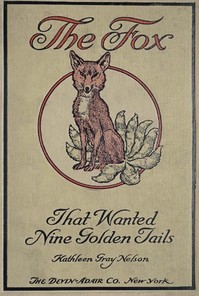
The Fox That Wanted Nine Golden Tails — Reading Companion
(0 User reviews)
38
Project Gutenberg
2018
Not confirmed
Fairy tales; Foxes -- Juvenile fiction
Readers of public-domain and historical texts
Project Gutenberg digital edition
en
Edition facts
Words
15,745
Reading time
69 min
Text sections
6
This digital edition of The Fox That Wanted Nine Golden Tails — Reading Companion is described by source-level measurements including 15,745 words, 1 hr 9 min estimated reading time, and 6 detected text sections.
The text analysis averages about 23.8 words per sentence, while the detected sections provide another way to judge how the source is divided.
Project Gutenberg metadata also associates the work with “Fairy tales,” connecting these edition facts with the source record’s subject description.
Source:
Project Gutenberg record #57339
A Japanese fox, seeking nine golden tails after a millennium, faces a choice between transformation into a woman or wizard, leading to adventures with a dragon-guarded pearl and a scheming Queen-Mother.
Editorial Edition Score
4.5/5
★★★★★
★★★★★
Calculated from edition completeness, EPUB availability, text structure and catalogue metadata. Not a user rating.
How this score is calculated
- Description quality20 pts
- Title & short description10 pts
- Source metadata20 pts
- Text length15 pts
- Chapters / structure15 pts
- EPUB file integrity20 pts
Total of 100 points, scaled to a 2.5-5.0 range. Editions with an empty description or a missing EPUB file are not scored.
Edition quality
Read the Text
about the size of a cat, and lived in the Fertile Plain of Sweet Flags, one cool and dewy night his mother made a bed of leaves behind a log, and as she cuddled him close to her warm bosom she told him how to know if the dogs were anywhere around.
She said when the wind brought him a hot breath out of a cold nose, a breath that smelt like it had a bark in it, he must listen with both ears, and after that if he heard a sound that was neither hungry nor angry, but came full tilt out of a throat just bursting with joy, he would know that the dogs were on his trail, for they only chased animals for the fun of catching them, and because a fox was so cunning, it was great sport to run him down. And if he saw strange tracks, in which had lodged a caterpillar’s hair or an ant’s egg, the dogs had passed the day before, but if the tracks were bare, the feet that made them were not far away.
And she added if he were smart enough to never, never let the dogs get after him, when he was a thousand years old a dragon would give him nine golden tails. It was true no one had ever seen a fox with more than one tail, but in the Kojiri, or Tails of Ancient Things, which was written on the bark of the oldest trees, it had always been told that there would be one fox who would in this way become the hero of his race, and perhaps he would be that very one if he learned to be clever and careful. And as his mother was the wisest fox on earth, he knew that she knew what she was talking about, and he was glad now to hear there was a dragon handy.
In fact, Napatantutu was exactly the kind of a home the fox was looking for, dragon and all, and he was quite sure he could pass a thousand quiet years here without ever hearing the bark of a dog. He no longer jumped at the sound of every crackling twig or put his ear to the ground before he sat down to rest, and often he would lie for hours on some cool knoll licking his paws and thinking up some prank to play on his neighbors. And he grew fat and saucy and lazy, and whisked his one insignificant tail proudly as he walked.
But, alas! there came an end to these delightful days. Late in the afternoon of his hundredth birthday, as he stood watching two ants wage a fierce battle over a grain of rice, close behind him he heard a sound that made his very blood run cold. He raised his head and sniffed the air, then stood trembling.
“The dogs!” he groaned, as a second time, and nearer now, came the awful noise, and he darted like an arrow through the forest.
Now Nio Kuro, a Prince and the most famous hunter in the kingdom, had come in his boat down the river that ran through the haunted wood. With him he had brought many servants and his pack of trained leopards, with which he hunted, and which were swifter and had keener scent than any dogs. Possibly Nio Kuro had never heard of this forest, or it may have been that he became so excited when the leopards started on their wild chase that he forgot to be afraid of goblins. At any rate, he dashed headlong into the wood, encouraging his leopards with loud shouts, and his servants, after a moment’s hesitation, followed him.
The fox was crashing through the underbrush just ahead of his pursuers, now tearing his way through hanging vines and again leaping over rocks and streams. The leopards came closer and closer behind him. On they flew through swamps and thickets, into thorn bushes and bramble patches and across deep ravines, and not even the wind could keep up with them. At last the poor fox was tired out. His legs were torn and bleeding, he had left bunches of his fur on many a bush and thorn, his feet were bruised and lame and his breath almost gone.
The story opens with a Japanese fox who, unlike his American counterparts, knows that if he lives a thousand years without being chased by a dog, he will become a celestial fox with nine golden tails. This ambition drives him to reject intermediate transformations into a beautiful woman or a mighty wizard, though he later wavers. The narrative voice is wry and conversational, as when the fox remarks that pretty women make trouble and wise men try to straighten it out, but neither has as much fun as a fox. This tone, combined with the fox's extensive knowledge of dogs and his network of bird and insect informants, establishes a protagonist who is both clever and impatient.
A Fox with a Thousand-Year Plan
The fox's goal is clear from the start: he wants nine golden tails, the most wonderful thing in all the world. To achieve this, he must avoid being chased by a dog for a thousand years. The narrative details his early confidence—he can hear a dog barking miles away and smell hounds even farther—but also his growing weariness. After decades of skulking and hiding, he nearly compromises, thinking there are worse things than pretty women. The turning point comes when he has a most exciting adventure that makes him reconsider his patience. This section establishes the fox's internal conflict between his grand ambition and the tedium of daily survival.
The Wizard's Bargain and the Pearl
Later excerpts shift to a wizard imprisoned in a dungeon, who strikes a deal with the Queen-Mother. She wants a magical pearl guarded by a dragon with ever-open eyes and sharp teeth. The wizard claims only he can retrieve it, but he needs freedom. The Queen-Mother, skeptical, demands the pearl in exchange for his release. The wizard devises a plan: use the juice of a weed with purple flowers and crimson-dotted petals to put the entire castle to sleep. This section introduces a new set of characters and a plot involving deception, magic, and a high-stakes quest. The wizard's confidence—he laughs after the Queen-Mother leaves—suggests he may have his own agenda.
The Queen-Mother's Suspicion and the Wizard's Escape
The Queen-Mother, though willing to help the wizard, is not naive. She threatens him: if he does not return with the pearl, his head will be brought back to court. The wizard promises to return within seven days—three to go, three to come back, and one to persuade the dragon. He boasts that wearing his magic mantle, he will slip past guards like a puff of wind. The exchange reveals the Queen-Mother's cunning and the wizard's resourcefulness. The scene ends with the wizard sleeping peacefully after the Queen-Mother unlocks his cell, setting the stage for the escape. The reader is left to wonder whether the wizard will keep his word or betray her.
The Banquet and the Sleeping Draught
At the King's banquet for his bride, the Queen-Mother proposes sending wine to all servants, jailers, and guards to drink to the Queen's health. This is the execution of the wizard's plan: the drugged wine will induce a deep sleep, allowing the wizard to flee. The excerpt cuts off before the outcome, but the setup is complete. The Queen-Mother's role as a manipulator is clear—she uses the celebration as cover. This section highlights the story's reliance on clever schemes and magical aids, and it builds suspense as the reader anticipates whether the wizard will succeed in escaping and retrieving the pearl.
The excerpts reveal a tale structured around a series of bargains and transformations, each with its own risks. The fox's initial desire for golden tails gives way to a wizard's quest for a pearl, suggesting that the narrative may weave multiple characters' ambitions together. Readers should pay attention to how the fox's story connects to the wizard's, and whether the fox ever reappears. The tone remains playful even in tense moments, and the magic is grounded in specific rules—like the weed's effects—that reward close reading.
I remember sitting on my grandmother's porch, the papery pages of an old fox tale warm in my lap, and feeling that ache of a promise made to oneself—like the fox’s thousand-year wait. It reminded me of a quieter truth in Australian fairy tales — Background and Themes, where the land itself seems to hold similar patience. Both left me wondering if all transformations are really a form of remembering.
There are no reviews for this eBook.
There are no comments for this eBook.
Reader reflection
How did this book work for you?
Your answers remain private and are stored only in this browser.
Your progress
0
/
10
2
Did this book hold your interest?
3
Would you recommend this book to another reader?
4
How demanding did the text feel?
5
Could you follow the author’s main argument?
6
Do you expect to return to this book?
7
How closely did the book connect with your experience?
8
How would you rate its originality?
9
Which lesson or insight stayed with you?
10